Deep dive
Overview
Voyah (岚图) is the premium smart new-energy vehicle brand of Dongfeng Motor Corporation, one of China's three central automotive SOEs. Dongfeng released the brand in July 2020, and the operating entity Voyah Automotive Technology Co., Ltd. was established on 26 June 2021 before being converted into a joint-stock company and listed by introduction on the Hong Kong Stock Exchange under 07489.HK on 19 March 2026 [1][6]. The brand designs, develops, manufactures and sells new-energy passenger vehicles across the sedan, SUV and MPV segments, positioned in the high-end market at a price band of roughly RMB 200,000-500,000 [1]. It grew sales from 19,409 units in 2022 to 150,169 in 2025 and turned profitable in 2025 with revenue of RMB 34.865 billion and net profit of about RMB 1.02 billion [6]. Starting from Dongfeng's internal 'H division' in 2019, Voyah completed its sedan/SUV/MPV line-up within about five years and became the first central-SOE premium NEV brand to reach 300,000 cumulative units off the line [1]. This page is a brand study of Voyah itself; the parent group Dongfeng Motor Corporation is covered in its own research.
Key facts
- Founded
- Brand released July 2020; operating entity Voyah Automotive Technology Co., Ltd. established 26 June 2021 (predecessor Dongfeng 'H division' prepared from 2019)[1][6]
- Headquarters
- Wuhan, Hubei, China (Wuhan Economic & Technological Development Zone)[1]
- Ownership
- State-owned (central SOE subsidiary; controlled by Dongfeng Motor Corporation, a central SOE supervised by SASAC)[1][12][24]
- Controlling shareholder
- Dongfeng Motor Corporation; after listing it held about 58.45% directly, and together with Dongfeng Asset Management (about 3.67%) and the Wuhan Woya employee platform (about 7.35%) about 69.47%. As of 25 June 2026, Dongfeng Motor Corporation, Dongfeng Asset Management, Dongfeng Motor (Hong Kong) International Co., Limited and Wuhan Woya together held 2,438,479,300 domestic shares and 168,100,609 H shares, about 70.83% of shares in issue[1][12][38]
- Listing
- Hong Kong Stock Exchange main board, 07489.HK (listed by introduction on 19 March 2026)[1][2]
- Employees
- 8,738 (as of 31 December 2025; of which 8,198 full-time; R&D team 3,164)[29]2025-12-31
- Net profit (FY2025)
- RMB 1,017 million (profit and total comprehensive income attributable to owners of the parent)[1][3]FY2025
- Overseas sales (2025)
- 18,333 units[1]2025
History
Voyah's predecessor, Dongfeng's 'H division', is set up to build a premium smart NEV brand; Lu Fang joins Dongfeng in December 2018 as technical lead for strategic planning, and Jiang Tao becomes COO of the project preparatory group in June 2019.[6][12]
Dongfeng officially releases the Voyah brand (name, logo, strategy and the iLand concept car) as its premium smart new-energy vehicle brand.[1][6]
The first production model, the performance-oriented smart electric SUV Voyah FREE, is unveiled.[15]
Voyah FREE launches on 19 June; Voyah Automotive Technology Co., Ltd. becomes an independent legal person on 26 June; the first FREE rolls off the line on 30 June as Dongfeng's 52-millionth vehicle.[1][6]
Voyah announces entry into Europe, with Norway as the first stop, positioning itself as an early Chinese NEV 'national team' brand to go overseas.[18]
The flagship luxury MPV Voyah Dream (Mengxiangjia) launches on 7 May; it becomes the industry's first high-end new-energy MPV and later the brand's best-selling model.[15][18]
At its technology day Voyah releases the ESSA native intelligent electric architecture and a centralised SOA electronic/electrical architecture.[18]
On 17 November Voyah announces that its Series A strategic-investor agreements have been signed and closed, describing the round as nearly RMB 5 billion with a post-money valuation of nearly RMB 30 billion. Co-leads are the SOE mixed-ownership reform fund and BOC Asset, with follow-on investors including ICBC Investment, ABC Investment and Sunwoda; Dongfeng also takes part. After the round Dongfeng holds 78.88%, Series A investors 12.37% and the employee platform 8.75%. The listing document records that pre-IPO investors paid RMB 3.65 billion and that the related capital increase was completed in December 2022.[37][1]
The first sedan, Voyah Zhuiguang (Chase), launches on 18 April; the Zhuiguang PHEV follows in December, when the SOA architecture is named the Tianyuan architecture.[18]
The mid-size pure-electric SUV Voyah Zhiyin launches on 13 October, completing a sedan/SUV/MPV line-up; Voyah records its first single-quarter profit in Q4 2024.[15][1]
Dongfeng Motor Group (0489.HK) announces that Voyah will list on the HKEX by introduction while Dongfeng Motor Group is privatised.[11]
Voyah completes its share reform and industrial-and-commercial registration change on 15 September, renaming itself 'Voyah Automotive Technology Co., Ltd.' (a joint-stock company) with registered capital raised from about RMB 3.67 billion to 3.68 billion.[18][34]
Lu Fang succeeds You Zheng as chairman and legal representative, while remaining CEO; the board is refreshed with several new directors.[18][12]
Voyah files its listing application with the HKEX on 2 October, disclosing its prospectus (application proof).[18]
The full-size six-seat flagship SUV Voyah Taishan launches on 18 November; Voyah's cumulative 300,000th vehicle (a Taishan) rolls off the line in November, the first central-SOE premium NEV brand to reach that milestone.[30][1]
Jiang Tao is appointed general manager and CEO (media report the appointment on 10 December; Lu Fang stays chairman and party secretary); full-year 2025 sales reach 150,169 units and net profit turns positive at RMB 1,017 million.[12][6]
Voyah clears HKEX listing vetting (passing the hearing on 29 January and receiving approval-in-principle on 11 February) and publishes its listing document on 13 February.[1][11]
Voyah lists on the HKEX main board by introduction under stock code 07489 (the first central-SOE premium NEV brand listed in Hong Kong); the Taishan X8 makes its debut the same day, and Dongfeng Motor Group's H shares were delisted the day before.[6][7][21]
Voyah publishes its financial results announcement for the year ended 31 December 2025.[3]
The five-seat full-size SUV Voyah Taishan X8 launches on 22 May; in the same month Dongfeng and Stellantis sign a non-binding MOU to explore a European joint venture for Voyah sales and distribution.[31][33]
Voyah formally enters the Saudi market with a launch event in Riyadh on 17 June; by end-June it is present in 40 countries and regions with over 240 overseas outlets.[33][17]
Current operations
Business structure
Voyah's revenue is dominated by passenger-vehicle sales, with a fast-growing mix of parts, after-market services and technical services. In H1 2026 total revenue was RMB 18.16 billion (up 42.4%), of which vehicle sales were RMB 16.47 billion (up 36.2%), after-market revenue RMB 1.19 billion (up 113.5%) and technical-service revenue RMB 457 million (up about 591.7%); overseas revenue was RMB 2.54 billion (up 51.5%), and gross margin fell to 17.7% from 21.4% a year earlier [4]. Almost all revenue is earned in China, where the Voyah Dream MPV contributes the largest share of sales; per the prospectus, the Dream sold 26,518 units (52.7% of total sales) in 2023, 46,687 (58.3%) in 2024 and 40,111 (60.15%) in the first seven months of 2025 [1][35]. Over 2022-2024, passenger-vehicle sales were 89.0%, 96.1% and 94.9% of revenue respectively, with parts sales of RMB 140 million, 330 million and 600 million and other income of RMB 530 million, 170 million and 390 million [15].
Technology and platforms
Voyah organises its self-developed capabilities into five technology bases: the platform architecture (including the ESSA native intelligent electric architecture and the centralised SOA electronic/electrical architecture, named the Tianyuan architecture), the Lanhai (岚海) powertrain, the Xiaoyao (逍遥) intelligent cockpit, the Kunpeng (鲲鹏) intelligent-driving system and the Voyah technology ecosystem [35][23]. The ESSA architecture is described by the company as the world's first native intelligent electric architecture compatible with pure-electric, plug-in-hybrid and range-extender powertrains, with about 90% component commonality [11]. The 800V Lanhai intelligent super-hybrid delivers 360-410 km of pure-electric range and over 1,400 km of combined range on mid-to-large hybrid models [11]. In intelligent driving Voyah runs a dual track of self-development and open cooperation: it develops its own Kunpeng ADAS, and cooperates with Huawei, whose Qiankun ADS 4 and Harmony cockpit 5 equip the Qiankun-series versions of models such as the 2026 Dream, while the Kunpeng series of the same model uses the self-developed Kunpeng ADAS 2.0 [36][18]. As of 31 December 2025 Voyah held 1,874 granted patents and 5,405 filed patent applications, with invention patents about 88% of the total [29]. The Tianyuan centralised E/E architecture was included in SASAC's recommended catalogue of central-SOE technology achievements and has been licensed to more than 10 domestic brands [27]. Toward L3 autonomy, by end-2025 Voyah had completed a cumulative 110,000 km of on-road testing and 900,000 km of simulation testing; the Taishan Ultra carries an 896-line lidar [29].
Manufacturing and capacity
Voyah has two plants - Yunfeng and Huangjin - in the Wuhan Economic & Technological Development Zone with combined annual capacity of about 450,000 units; the Huangjin plant's rooftop solar generates about 20 GWh of electricity a year [10][29]. Both plants operate industrial-4.0 digital production lines covering stamping, welding, painting and final assembly [25].
Domestic market position
As of 31 July 2025 Voyah's sales-and-service network covered 148 cities with 407 stores (192 self-operated and 215 partner-operated), and by 30 June 2026 this had grown to 509 stores across 170 cities [35][17]. Citing CIC data, media coverage of the listing noted that Voyah's 2024 gross margin ranked second among Chinese NEV makers and that the Dream was the No.2 high-end NEV MPV by 2024 sales [18].
Overseas business
Overseas sales grew from 5,647 units in 2023 to 8,419 in 2024 and 18,333 in 2025 [1]. Voyah formally entered the Saudi market with a launch event in Riyadh on 17 June 2026, and by end-June 2026 was present in 40 countries and regions with over 240 overseas outlets; it is deepening its position in Europe, building out the Middle East and preparing right-hand-drive models [33][10].
Brand portfolio
| Brand | Positioning | Price band | Founded | Ownership | Status | Sources |
|---|---|---|---|---|---|---|
| 岚图 FREE(FREE+ / FREE 318) / Voyah FREE (FREE+ / FREE 318) | Mid-to-large SUV, the brand's first model (REEV/range-extender and BEV), launched June 2021; positioned as a performance-oriented smart electric SUV. | RMB 219,900-279,900 (China retail price, 2025 model year) | 2021 | Launched 19 June 2021; the refreshed FREE 318 and FREE+ (with Huawei Qiankun ADAS) carry the series today. FREE-series sales were 11,836 units (2022), 18,796 (2023) and 23,206 (2024), and 18,226 units in the first seven months of 2025. | active | [1][15][35] |
| 岚图梦想家(含梦想家 9) / Voyah Dream (Mengxiangjia, incl. Dream 9) | Full-size luxury MPV, launched May 2022, the industry's first high-end new-energy MPV and Voyah's best-seller. | RMB 329,900-439,900 (China, 2026 model year official guide price) | 2022 | Launched 7 May 2022. Dream-series sales were 7,551 units (2022), 26,518 (2023) and 46,687 (2024), and 40,111 units in the first seven months of 2025 (60.15% of total sales); it was the No.2 high-end NEV MPV by sales in 2024 (about 47,000 units), and delivered about 76,000 units in 2025. The refreshed 2026 model year launched on 15 September 2025 in two series - the Kunpeng series (self-developed Kunpeng ADAS 2.0) and the Qiankun series (Huawei Qiankun ADS 4 and Harmony cockpit 5) - at an official guide price of RMB 329,900-439,900. The Dream 9 flagship variant was planned for H2 2026. | active | [1][15][6][16][35][36] |
| 岚图追光(含追光 L / 追光 S) / Voyah Zhuiguang (Chase, incl. Zhuiguang L/S) | Mid-to-large sedan (BEV and PHEV), launched April 2023, the brand's flagship sedan line. | RMB 252,800-385,900 (PHEV 252,800-277,800 / BEV 322,900-385,900, China) | 2023 | BEV launched 18 April 2023; the Zhuiguang PHEV launched December 2023. Zhuiguang-series sales were 22 units (2022), 4,965 (2023) and 4,977 (2024), and 1,768 units in the first seven months of 2025. The refreshed Zhuiguang L launched December 2025, and the Zhuiguang S, a pure-electric SUV, launched on 15 August 2026. | active | [1][15][35][5] |
| 岚图知音 / Voyah Zhiyin | Mid-size pure-electric SUV, launched October 2024, positioned as a volume model below RMB 250,000. | RMB 196,900-242,900 (China, 2025 model year) | 2024 | Launched 13 October 2024. Zhiyin-series sales were 6 units (2023) and 5,246 (2024), and 6,575 units in the first seven months of 2025. It competes in the mid-size BEV SUV segment against the Tesla Model Y and other domestic models. | active | [1][15][35] |
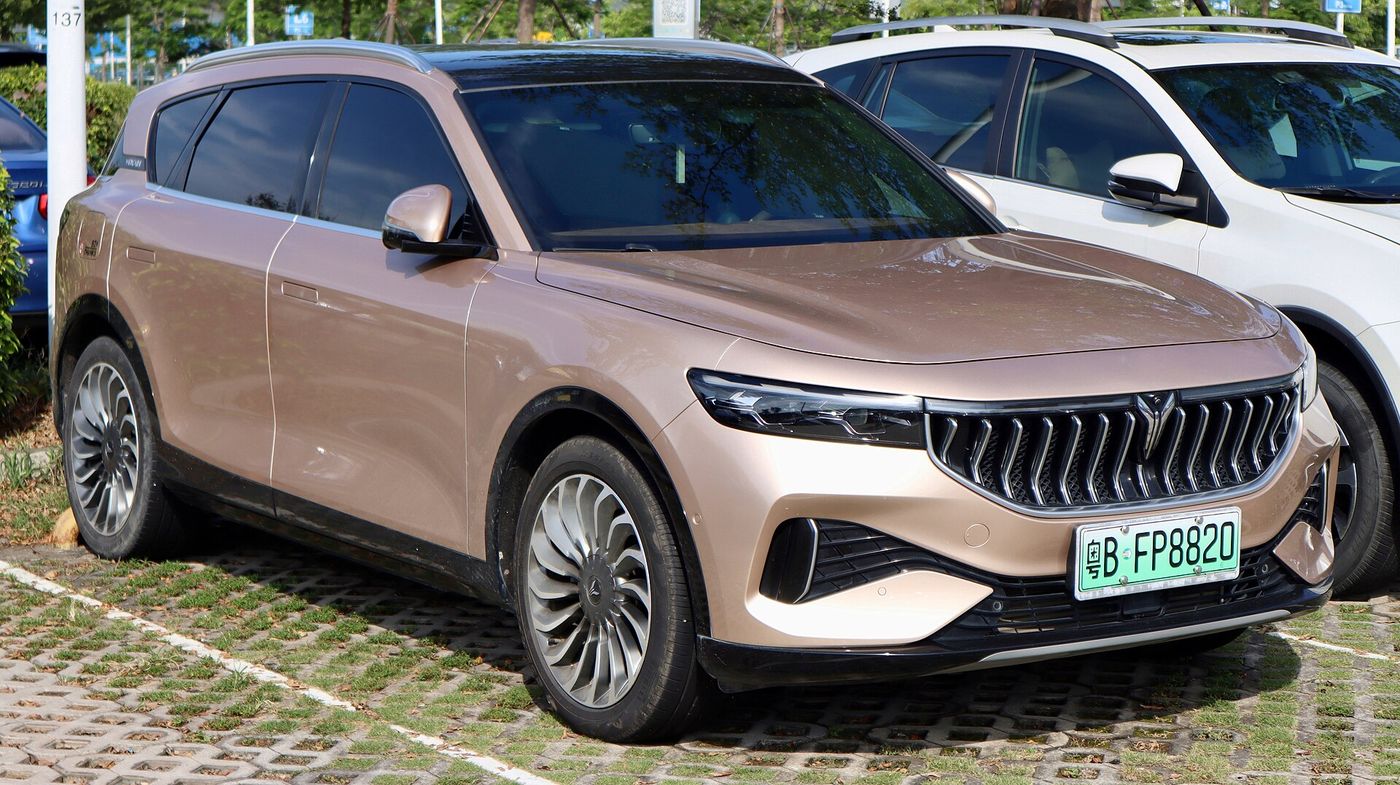
| 岚图泰山(含泰山 Ultra / 黑武士) / Voyah Taishan (incl. Taishan Ultra / Black Warrior) | Full-size six-seat flagship SUV, launched 18 November 2025, positioned as the SUV flagship with Huawei high-level ADAS and a three-chamber air suspension. | RMB 379,900-509,900 (China, launch price) | 2025 | Launched 18 November 2025 in Shenzhen in four versions (Max, Max+, Ultra, Black Warrior). On 17 March 2026 the 'new-generation 896-line lidar flagship SUV' Taishan Ultra entered volume delivery and the Taishan Black Warrior went on sale. Together with the Dream and Zhuiguang L it forms Voyah's 'three flagships'. | active | [30][32] |
| 岚图泰山 X8 / Voyah Taishan X8 | Full-size five-seat SUV (PHEV and BEV), launched 22 May 2026, positioned as a five-seat full-size SUV with Huawei Qiankun ADS and the 896-line dual-path imaging lidar on top trims. | RMB 292,900-379,900 (guide; RMB 282,900-369,900 after launch incentives, China) | 2026 | Debuted on 19 March 2026, the day Voyah listed, and pre-sale opened in late April. Launched on 22 May 2026 with five versions across PHEV and EV; the company reported over 15,000 firm orders within 18 hours and over 50,000 pre-sale orders. | active | [31][32][33] |
Founders and leadership
Founder
Voyah has no private founder. It is a brand created by Dongfeng Motor Corporation (a central SOE), prepared from 2019 through Dongfeng's internal 'H division' and formally released in July 2020; You Zheng, a Dongfeng group vice-president, served as its first chairman from 2019 until September 2025 [6][1].
Key management (as of 2026-10-29)
- Lu Fang (卢放) - chairman, party secretary and executive director. He served as CEO from June 2021 to December 2025 and became chairman on 22 September 2025. He joined Dongfeng Motor Group in December 2018 as technical lead for the strategic-planning special project and held that role until May 2021. Before Dongfeng he worked at FAW-Volkswagen from 1998 (rising to section chief for passive safety), then at FAW Car as deputy director of the product department from April 2014 to July 2018 and subsequently project-management director of the Benteng development institute, and was technical director of Changchun FAW Fusheng Lear Automotive Seating Systems from July to December 2018. The prospectus biography describes him as aged 50. He earned a bachelor's degree in automotive and tractor engineering from Tongji University in July 1999, a master's degree in vehicle engineering and an MBA from Jilin University in December 2006, and a doctorate in vehicle engineering in June 2014; he was rated a professor-level senior engineer in January 2017, and also served as chief brand officer from March 2022 to December 2024 [12][6][9].
- Jiang Tao (蒋焘) - executive director, general manager, chief executive officer and chief operating officer. He has been Voyah's COO since the company's establishment in June 2021, became an executive director on 22 September 2025 and CEO in December 2025 (media report 10 December). The prospectus biography describes him as aged 46. He earned a bachelor's degree in plastic-forming processes and equipment (mould design and manufacturing) from Hefei University of Technology in June 2001 and a master's degree in materials science and engineering from Tsinghua University in July 2004. Before Voyah he was a quality-assurance engineer at Dongfeng Nissan (2004-2010), a section chief for the welding and final-assembly shops at Guangzhou Fengshen Motor (2011-2016), director of the engineering-affairs (gongwu) department and then general manager of Dongfeng Motor Co., Ltd. Dalian Branch (2016-2019), and COO of the Voyah project preparatory group at Dongfeng Motor Group (2019-2021) [12][9].
Board and shareholding
The board has nine directors: executive directors Lu Fang and Jiang Tao; non-executive directors Liao Xianzhi, Yang Yanding, Hu Xiao and Qin Jie; and independent non-executive directors Yang Yong, Xin Dinghua and Fu Bingfeng [3]. Dongfeng Motor Corporation is the controlling shareholder: after the listing and privatisation it directly held about 58.45%, and together with its controlled entity Dongfeng Asset Management (about 3.67%) and the employee platform Wuhan Woya (about 7.35%) held and exercised about 69.47% of the votes [12]. As of 25 June 2026, Dongfeng Motor Corporation, Dongfeng Asset Management, Dongfeng Motor (Hong Kong) International Co., Limited and Wuhan Woya together held 2,438,479,300 domestic shares and 168,100,609 H shares, about 70.83% of the shares in issue [38]. Other pre-listing investors include the mixed-ownership reform fund (about 2.85%), BOC Financial Asset Investment (about 2.56%), ICBC Financial Asset Investment, Wuhan Economic Development Fund and ABC Financial Asset Investment [12].
Financials
| Fiscal year | Revenue | Gross margin (%) | Net profit attributable to parent | R&D | Sources |
|---|---|---|---|---|---|
| 2022 | 6,052 | 8.3 | -1,538 | 334 | [1] |
| 2023 | 12,749 | 14.2 | -1,496 | 672 | [1] |
| 2024 | 19,361 | 21 | -90 | 815 | [1] |
| 2025 | 34,865 | 20.9 | 1,017 | 1,360 | [1][3] |
Unit: RMB million. Fiscal year ends 31 December. Figures are prepared under IFRS and taken from the audited consolidated financial statements in the listing document (dated 13 February 2026, covering FY2022-FY2025) and the results announcement for the year ended 31 December 2025. 'revenue' is total revenue (RMB 6,051.8 million, 12,749.4 million, 19,360.6 million and 34,865 million for 2022-2025). 'net_profit' is profit/(loss) for the year and total comprehensive income/(loss) attributable to owners of the parent (i.e. 归属于母公司股东/母公司拥有人口径, not 归属于普通股股东); the company has no material non-controlling interests. The company was loss-making in FY2022-FY2024 and turned profitable in FY2025 (about RMB 1,017 million, commonly reported as RMB 1.02 billion). 'gross_margin_pct' is gross profit divided by revenue (8.3%, 14.2%, 21.0%, 20.9%). 'rnd' is the research and development expenses recognised in the income statement (研发费用, the expensed portion only): RMB 333.6 million, 671.7 million, 814.6 million and 1,359.6 million for 2022-2025. The company also discloses a broader total R&D expenditure (研发开支/研发投入, including capitalised development costs) which is higher: RMB 1,343 million, 1,121 million and 2,003 million for 2022-2024 respectively (22.2%, 8.8% and 10.3% of revenue), and about RMB 3.9 billion (11.2% of revenue) in 2025 per its ESG report. For context, FY2025 operating cash flow was about RMB 4.72 billion and cash and cash equivalents were about RMB 7.97 billion at end-2025. These are financial disclosures only; this page does not constitute any trading recommendation.
Competition
Competitive position: our assessment
Our assessment: Voyah competes in China's RMB 200,000-500,000 premium NEV segment against NIO, Li Auto, Xpeng and Zeekr, as well as Huawei-backed brands (AITO and others) and premium JV EVs [1]. Its scale is still well below the leaders, with 150,169 units sold in 2025, and the company is highly dependent on one model - the Dream MPV, which contributed 60.15% of sales in the first seven months of 2025 [35][6].
Strengths and constraints: our assessment
Our assessment: Voyah's main strengths are the manufacturing, engineering and supply-chain resources of Dongfeng, a strong technology base (ESSA architecture, Tianyuan SOA architecture, 800V Lanhai hybrid, Kunpeng ADAS and Huawei cooperation), and profitability achieved in 2025 - a rare outcome among Chinese NEV start-ups. Its gross margin rose from 8.3% in 2022 to 20.9% in 2025 [1]. Citing CIC data, media coverage of the listing noted that Voyah's 2024 gross margin ranked second among Chinese NEV makers and that the Dream was the No.2 high-end NEV MPV by sales in 2024 (about 47,000 units) [18]. But the return to a net loss of RMB 389 million in H1 2026 on higher material costs and spending shows the profit is not yet stable, and dependence on the MPV segment concentrates its exposure to a small market - total sales in the first seven months of 2025 were 66,680 units, implying a monthly average below 10,000 [4][35]. These judgements are based on the sales, gross-margin and product-mix data cited above.
Outlook
Company plans
Voyah plans to launch one to three new models each year and to have six to nine models by the end of 2026, expanding beyond its MPV concentration; its 2026 plan includes the Taishan Ultra, Taishan X8, FE and Zhufeng models and L3-level assisted driving [35][13]. It targets expanding its domestic retail network toward 1,000 touchpoints covering over 200 cities [35][18]. Overseas, it will deepen Europe, build out the Middle East and enter right-hand-drive markets, with a right-hand-drive Dream due in H2 2026 [10]. In May 2026 Dongfeng and Stellantis signed a non-binding memorandum of understanding to explore a European joint venture to handle Voyah sales and distribution; this is an agreement to explore, not a completed transaction [33]. For H2 2026 the company said it would push the Zhuiguang S pure-electric SUV and the Dream 9 flagship MPV to market [17]. These are the company's stated plans, not achieved results.
Our analysis
Our assessment: reducing dependence on the Dream MPV is the key near-term test. New flagships (Taishan X8, Dream 9, Zhuiguang S) must ramp quickly to offset the MPV concentration, and the H1 2026 loss shows that higher raw-material costs and channel/overseas investment can quickly reverse profitability [16]. Success in Europe and right-hand-drive markets depends on tariff and certification conditions that are outside Voyah's control, so the pace of overseas volume is uncertain [10]. As a separately listed entity, Voyah can raise capital in Hong Kong, but its long-term funding and governance outcome still depends on Dongfeng's continued support and subsequent disclosures [6]. On the macro side, in H1 2026 domestic passenger-vehicle insurance registrations fell 19% year on year and NEV registrations fell 14%, with the above-RMB 200,000 premium segment among the few growing tracks [16]. These judgements rest on the product, financial and market data cited above.
Risks
- Dependence on a single model: the Dream MPV contributed 60.15% of sales in the first seven months of 2025, concentrating revenue in a small, cyclical MPV segment [35].
- Profit volatility: Voyah returned to a net loss of RMB 389 million in H1 2026, from a RMB 464 million profit a year earlier, on higher lithium-carbonate and memory-chip costs and increased R&D, sales and marketing spending [4].
- Intense price competition: the premium NEV market is contested by NIO, Li Auto, Xpeng, Zeekr and Huawei-backed brands, and industry price cuts pressured the brand to lower FREE and Zhuiguang starting prices over time [26].
- Overseas trade barriers: Chinese-built battery-electric vehicles face EU countervailing duties and other tariffs; Voyah's overseas expansion is therefore exposed to trade-policy and certification risk [13].
- Reliance on government subsidies: Dazhong Daily's breakdown of the interim statements noted that in the first seven months of 2025, government grants related to revenue (RMB 603 million) and to assets (RMB 39 million) totalled RMB 642 million, a material contributor to the RMB 434 million profit for that period [22].
- Controlling-shareholder dependence: Voyah relies on Dongfeng for manufacturing, engineering and financing, and as of 25 June 2026 Dongfeng Motor Corporation together with Dongfeng Asset Management, Dongfeng Motor (Hong Kong) International Co., Limited and Wuhan Woya held about 70.83% of the shares in issue; related-party and governance risks follow from this concentrated ownership [38].
Sources
- 岚图汽车科技股份有限公司上市文件(以介绍方式于香港联交所主板上市;含 FY2022–FY2025 经审计财务数据、股权架构、车型与销量) Tier A ·
- 岚图汽车 885,381,529 股 H 股以介绍方式上市公告(港交所) Tier A ·
- 岚图汽车 截至2025年12月31日止年度的财务业绩公告(港交所;含董事会名单) Tier A ·
- 岚图汽车 截至2026年6月30日止六个月的中期业绩公告(港交所) Tier A ·
- 岚图汽车 2026 中期报告(港交所;含截至 2026 年 6 月 30 日股权) Tier A ·
- 湖北省人民政府:港股上市 岚图擘画新蓝图(新华网稿) Tier A ·
- 湖北省人民政府:央国企高端新能源汽车第一股诞生,岚图汽车在港交所挂牌上市 Tier A ·
- 新华网:岚图汽车港交所挂牌上市 岚图泰山X8同步首秀 Tier B ·
- 东风汽车报(长江云):骏马蹄疾踏新途——岚图汽车党委书记、董事长卢放,总经理(CEO)蒋焘 Tier A ·
- 武汉经济技术开发区政府门户:岚图汽车正式发布ESG品牌 Better VOYAH,三大行动加速国际化(含 45 万辆产能、40 国、三大行动) Tier A ·
- 中国经济网:销量、品牌、业绩齐向上,岚图汽车敲定港股上市迎新局(含 ESSA、800V 岚海、专利) Tier B ·
- 新浪财经:岚图上市进入倒计时(卢放、蒋焘详细履历;上市前后股权架构) Tier B ·
- 新浪财经:岚图汽车港交所IPO,首日破发跌超13%(2023–2025 海外销量及营收) Tier B ·
- 凤凰网(红星新闻·大风号自媒体):IPO观察——岚图汽车递表港交所,6成销量来自MPV车型(仅作线索,数据以招股书及权威媒体为准) Tier C ·
- 中国青年网:东风旗下电动车品牌岚图汽车向港交所递交招股书(2022–2024 各车型销量、乘用车收入) Tier B ·
- 中证网:岚图汽车上半年成绩单出炉(H1 2026 收入结构、海外销量、CEO 蒋焘) Tier B ·
- 齐鲁晚报·齐鲁壹点:岚图上市后发布首份半年报(H1 2026 分项收入、现金流) Tier B ·
- 华夏时报:正式冲刺IPO!岚图递交港股上市申请(2022–2024 财务、华为合作、渠道规划) Tier B ·
- 证券之星:岚图汽车(07489.HK)2025年度ESG报告解读(员工 8,738 人、研发投入 39 亿元、研发团队 3,164 人) Tier B ·
- 东风汽车报(长江云):岚图汽车召开6月形势目标教育大会(卢放、蒋焘职务) Tier A ·
- 东风官网:岚图汽车港股上市 东风公司资本市场改革落地 Tier A ·
- 大众日报:补贴6.4亿实现盈利,岚图汽车真的赚钱了吗(2022–2024 财务与政府补贴拆解) Tier B ·
- tastymoney(港股资讯):东风集团旗下高端新能源车企岚图汽车以介绍方式上市(技术底座、渠道、2025 业绩) Tier B ·
- 东风汽车集团股份有限公司 已审财务报表 2025年度(上交所债券信息披露;母集团年报引用) Tier A ·
- 东风汽车报(东风采购招投标平台):岚图汽车开启纯电战略新阶段,发布全球化三大行动和ESG品牌 Better VOYAH(两座工厂、合计年产能 45 万辆) Tier A ·
- 腾讯新闻(尺度汽车):17.99万元岚图知音,硬刚特斯拉Model Y(车型上市时间与价格、MPV 市场规模) Tier B ·
- 四川网络广播电视台:第十个中国品牌日再看岚图汽车(研发投入 39 亿元、6102 件专利、天元架构授权 10 余家品牌) Tier B ·
- 顶端新闻:从岚图港股上市,看央国企高端新能源的盈利拐点(L3 测试、896 线激光雷达、专利结构、研发团队) Tier B ·
- 岚图汽车 2025年度环境、社会及管治报告(港交所;员工数、研发投入、专利、L3 测试、黄金工厂光伏) Tier A ·
- 央广网:发力大六座旗舰SUV市场 岚图泰山正式上市(2025-11-18,37.99-50.99 万元) Tier B ·
- 东风汽车集团官网:高端大五座SUV价值坐标 岚图泰山X8上市(2026-05-22) Tier A ·
- 央视网:岚图汽车3月交付同比劲增50%「央国企高端新能源汽车第一股」上市首月表现亮眼(泰山Ultra量产交付、泰山X8首秀) Tier B ·
- 中国证券网(上海证券报):岚图汽车上半年亏损3.9亿元 门店扩张、新车上市等费用增加(沙特上市、Stellantis 备忘录) Tier B ·
- 中国质量新闻网:岚图汽车完成股改更名 介绍方式登陆港股(2025-09-15 股改更名、注册资本 36.8 亿元) Tier B ·
- 经济观察报(新黄河转载):岚图汽车向港交所递交上市申请 前7个月盈利4.34亿元(梦想家销量占比 52.7%/58.3%/60.15%、2022-2024 财务、渠道规划、2025 前九个月销量) Tier B ·
- 央广网:32.99万起 2026款岚图梦想家上市(官方指导价 32.99-43.99 万元、鲲鹏/乾崑双系列) Tier B ·
- 中证网:岚图汽车A轮融资近50亿元 投后估值近300亿元 Tier B ·
- 东方财富转载岚图汽车港交所自愿公告:截至2026-06-25东风公司、东风资管、东风汽车(香港)国际有限公司及武汉沃雅合计持股约70.83% Tier B ·
深度研究 Deep dive
概览
岚图(Voyah)是中国三大汽车央企之一——东风汽车集团有限公司的高端智慧新能源汽车品牌。东风于 2020 年 7 月发布该品牌,运营主体岚图汽车科技有限公司于 2021 年 6 月 26 日成立,其后完成股份制改造,并于 2026 年 3 月 19 日以介绍方式在香港联交所主板挂牌,股份代号 07489.HK[1][6]。品牌在中国设计、开发、制造及销售新能源汽车,覆盖轿车、SUV、MPV 三大细分市场,定位于高端领域,产品主要覆盖约 20 万元至 50 万元价格带[1]。其销量由 2022 年的 19,409 辆增至 2025 年的 150,169 辆,并于 2025 年扭亏为盈:营收 348.65 亿元、净利润约 10.2 亿元[6]。从 2019 年东风内部 h 事业部起步,岚图用约五年时间完成「轿车 + SUV + MPV」三大品类布局,并成为首个达成 30 万辆整车下线的央国企高端新能源汽车品牌[1]。本页为岚图这一品牌的研究,母集团东风汽车集团有限公司另有深度研究。
关键数据卡
- 总部
- 中国湖北省武汉市(武汉经济技术开发区)[1]
- 控股股东
- 东风汽车集团有限公司;上市后直接持股约 58.45%,连同东风资管约 3.67%、武汉沃雅员工持股平台约 7.35% 合计约 69.47%。截至 2026 年 6 月 25 日,东风公司、东风资管、东风汽车(香港)国际有限公司与武汉沃雅合计持有内资股 2,438,479,300 股及 H 股 168,100,609 股,约占已发行股份 70.83%[1][12][38]
- 员工数
- 8,738 人(截至 2025 年 12 月 31 日,其中全职 8,198 人、研发人员 3,164 人)[29]2025-12-31
- 海外销量(2025 年)
- 18,333 辆[1]2025
历史沿革
岚图前身东风 h 事业部组建,锚定高端智慧电动汽车市场;卢放 2018 年 12 月加入东风任战略规划部专项项目技术负责人,蒋焘 2019 年 6 月起任岚图项目筹备组首席运营官。[6][12]
首款量产车型「性能级智能电动 SUV」岚图 FREE 发布。[15]
6 月 19 日岚图 FREE 上市;6 月 26 日岚图汽车科技有限公司成为独立法人;6 月 30 日首台 FREE 量产下线,为东风第 5200 万辆汽车。[1][6]
岚图宣布进军欧洲市场,首站挪威,成为较早出海的央企新能源汽车品牌之一。[18]
岚图科技日发布原生智能电动平台 ESSA 与中央集中式 SOA 电子电气架构。[18]
11 月 17 日岚图宣布 A 轮引战融资协议已签署并交割,称本轮融资近 50 亿元、融资后估值近 300 亿元。国企混改基金与中银资产联合领投,工银投资、农银投资、欣旺达等跟投,东风集团同步参与;完成后东风集团持股 78.88%,A 轮投资者持股 12.37%,员工持股平台持股 8.75%。上市文件记载,上市前投资者支付代价 36.5 亿元,相关增资于 2022 年 12 月完成。[37][1]
4 月 18 日首款轿车岚图追光上市;12 月追光 PHEV 上市,SOA 电子电气架构命名为「天元架构」。[18]
10 月 13 日中型纯电 SUV 岚图知音上市,补齐轿车、SUV、MPV 三大品类;2024 年第四季度首次实现单季度盈利。[15][1]
东风集团股份(0489.HK)公告岚图将以介绍方式登陆港交所,东风集团股份同步私有化。[11]
9 月 15 日岚图完成股改与工商变更,正式更名为「岚图汽车科技股份有限公司」(股份有限公司),注册资本由约 36.7 亿元增至 36.8 亿元。[18][34]
10 月 2 日岚图向港交所递交上市申请,披露招股书。[18]
11 月 18 日全尺寸大六座旗舰 SUV 岚图泰山上市;11 月岚图累计第 30 万辆整车(泰山)下线,成为首个达成 30 万辆整车下线的央国企高端新能源汽车品牌。[30][1]
蒋焘出任总经理(CEO,媒体报任命于 12 月 10 日;卢放留任董事长、党委书记);2025 年全年销量 150,169 辆,净利润 10.17 亿元实现扭亏。[12][6]
岚图以介绍方式在港交所主板挂牌(股份代号 07489),成为首家登陆港股的央企高端新能源汽车品牌;同日泰山 X8 首秀,前一日东风集团股份 H 股撤销上市地位。[6][7][21]
岚图刊发截至 2025 年 12 月 31 日止年度财务业绩公告。[3]
5 月 22 日五座全尺寸 SUV 岚图泰山 X8 上市;同月东风与 Stellantis 集团签署非约束性谅解备忘录,探讨在欧洲设立合资企业负责岚图销售与分销。[31][33]
6 月 17 日在沙特利雅得举行上市活动,正式进入沙特市场;至 6 月底已进入 40 个国家和地区、建成 240 余家海外网点。[33][17]
现状
业务结构
岚图收入以整车销售为主,汽车零部件、后市场与技术服务收入快速增长。2026 年上半年总营收 181.6 亿元(同比增长 42.4%),其中整车收入 164.7 亿元(同比增长 36.2%)、后市场收入约 11.9 亿元(同比增长 113.5%)、技术服务收入 4.57 亿元(同比增长约 591.7%),海外收入 25.4 亿元(同比增长 51.5%);毛利率由上年同期 21.4% 降至 17.7%[4]。公司收入几乎全部来自中国,其中梦想家贡献最大份额:据招股书,梦想家 2023 年销售 26,518 辆(占总销量 52.7%)、2024 年 46,687 辆(占 58.3%)、2025 年前七个月 40,111 辆(占 60.15%)[1][35]。2022—2024 年乘用车销售收入占比分别为 89.0%、96.1%、94.9%;汽车零部件收入分别为 1.4 亿元、3.3 亿元、6.0 亿元;其他收入分别为 5.3 亿元、1.7 亿元、3.9 亿元[15]。
技术与平台
岚图将自研能力归纳为「五大技术底座」:平台架构(含 ESSA 原生智能电动架构与中央集中式 SOA 电子电气架构,后者命名「天元架构」)、岚海动力、逍遥智能座舱、鲲鹏智能驾驶与岚图技术生态[35][23]。ESSA 架构被公司称为全球首个兼容纯电、插混、增程多动力模式的原生智能电动架构,核心零部件通用化率约 90%[11]。800V 岚海智能超混在中大型混动车上实现 360–410 公里纯电续航、超 1400 公里综合续航[11]。智能化采取「自研 + 开放合作」双轨:自研鲲鹏智驾,并与华为合作——2026 款梦想家等车型的乾崑版搭载华为乾崑智驾 ADS 4 与鸿蒙座舱 5,同一车型的鲲鹏版则搭载自研鲲鹏智驾 2.0[36][18]。截至 2025 年 12 月 31 日,拥有已授权专利 1,874 项、申报专利 5,405 项,发明专利占比约 88%[29]。天元中央集中式电子电气架构入选国资委《中央企业科技创新成果推荐目录》,并已授权给超过 10 家自主品牌使用[27]。面向 L3,截至 2025 年底已完成累计 11 万公里实际道路测试以及 90 万公里模拟测试;泰山 Ultra 搭载 896 线激光雷达[29]。
制造与产能
岚图在武汉经济技术开发区拥有云峰、黄金两座工厂,合计年产能约 45 万辆;黄金工厂屋顶光伏年发电约 2000 万度[10][29]。两座工厂均为工业 4.0 数字工厂,覆盖冲压、焊装、涂装、总装等工序[25]。
国内市场地位
截至 2025 年 7 月 31 日,岚图销售及服务网络覆盖 148 个城市、407 家门店(192 家自营、215 家生态合作伙伴运营);至 2026 年 6 月 30 日增至 170 城、509 家门店[35][17]。据媒体援引灼识咨询数据,2024 年岚图毛利率在国内新能源车企中排名第二,梦想家则以 2024 年销量居高端新能源 MPV 第二[18]。
海外业务
海外销量由 2023 年的 5,647 辆增至 2024 年 8,419 辆、2025 年 18,333 辆[1]。2026 年 6 月 17 日在沙特利雅得举行上市活动正式进入沙特市场,至 6 月底已进入 40 个国家和地区、建成 240 余家海外网点;海外深耕欧洲、布局中东,并筹备右舵车型[33][10]。
品牌矩阵
| 品牌 | 定位 | 价格带 | 创立年份 | 所属主体与持股 | 状态 | 出处 |
|---|---|---|---|---|---|---|
| 岚图 FREE(FREE+ / FREE 318) / Voyah FREE (FREE+ / FREE 318) | 中大型 SUV,品牌首款车型(增程 + 纯电两种动力),2021 年 6 月上市,定位性能级智能电动 SUV。 | RMB 219,900-279,900 (China retail price, 2025 model year) | 2021 | 2021 年 6 月 19 日上市;现由改款 FREE 318 与搭载华为乾崑智驾的 FREE+ 延续该系列。FREE 系列销量 2022 年 11,836 辆、2023 年 18,796 辆、2024 年 23,206 辆,2025 年前七个月 18,226 辆。 | active | [1][15][35] |
| 岚图梦想家(含梦想家 9) / Voyah Dream (Mengxiangjia, incl. Dream 9) | 全尺寸豪华 MPV,2022 年 5 月上市,为行业首款高端新能源 MPV,是岚图销量主力。 | RMB 329,900-439,900 (China, 2026 model year official guide price) | 2022 | 2022 年 5 月 7 日上市。梦想家系列销量 2022 年 7,551 辆、2023 年 26,518 辆、2024 年 46,687 辆,2025 年前七个月 40,111 辆(占同期总销量 60.15%);2024 年以约 4.7 万辆居高端新能源 MPV 销量第 2 名,2025 年交付约 7.6 万辆。2026 款于 2025 年 9 月 15 日上市,推出鲲鹏(自研鲲鹏智驾 2.0)与乾崑(华为乾崑智驾 ADS 4 与鸿蒙座舱 5)两大系列,官方指导价 32.99 万–43.99 万元。旗舰梦想家 9 规划 2026 年下半年推出。 | active | [1][15][6][16][35][36] |
| 岚图追光(含追光 L / 追光 S) / Voyah Zhuiguang (Chase, incl. Zhuiguang L/S) | 中大型轿车(纯电 + 插混),2023 年 4 月上市,品牌旗舰轿车系列。 | RMB 252,800-385,900 (PHEV 252,800-277,800 / BEV 322,900-385,900, China) | 2023 | 2023 年 4 月 18 日纯电版上市;12 月追光 PHEV 上市。追光系列销量 2022 年 22 辆、2023 年 4,965 辆、2024 年 4,977 辆,2025 年前七个月 1,768 辆。改款追光 L 于 2025 年 12 月上市,追光 S(纯电 SUV)于 2026 年 8 月 15 日上市。 | active | [1][15][35][5] |
| 岚图知音 / Voyah Zhiyin | 中型纯电 SUV,2024 年 10 月上市,定位 25 万元以下的走量车型。 | RMB 196,900-242,900 (China, 2025 model year) | 2024 | 2024 年 10 月 13 日上市。知音系列销量 2023 年 6 辆、2024 年 5,246 辆,2025 年前七个月 6,575 辆,在中型纯电 SUV 市场对标特斯拉 Model Y 及多款本土车型。 | active | [1][15][35] |
| 岚图泰山(含泰山 Ultra / 黑武士) / Voyah Taishan (incl. Taishan Ultra / Black Warrior) | 全尺寸大六座旗舰 SUV,2025 年 11 月 18 日上市,定位搭载华为高阶智驾与三腔空气悬架的 SUV 旗舰。 | RMB 379,900-509,900 (China, launch price) | 2025 | 2025 年 11 月 18 日在深圳上市,推出 Max、Max+、Ultra、黑武士四个版型。2026 年 3 月 17 日「全新一代 896 线激光雷达旗舰 SUV」泰山 Ultra 量产交付,泰山黑武士同步上市。与梦想家、追光 L 构成岚图「三旗舰」格局。 | active | [30][32] |
| 岚图泰山 X8 / Voyah Taishan X8 | 全尺寸五座 SUV(插混 + 纯电),2026 年 5 月 22 日上市,定位搭载华为乾崑智驾、顶配配 896 线双光路激光雷达的大五座全尺寸 SUV。 | RMB 292,900-379,900 (guide; RMB 282,900-369,900 after launch incentives, China) | 2026 | 2026 年 3 月 19 日(岚图上市当日)首秀,4 月下旬开启预售。5 月 22 日正式上市,推出插混与纯电共 5 个版型;公司称上市 18 小时大定破 1.5 万辆,预售订单超 5 万辆。 | active | [31][32][33] |
创始人与管理层
创始人
岚图无民营意义上的单一创始人,是东风汽车集团有限公司(中央企业)打造的品牌,自 2019 年通过东风内部「h 事业部」筹备,2020 年 7 月正式发布;东风集团副总经理尤峥自 2019 年至 2025 年 9 月担任首任董事长[6][1]。
现任核心管理层(截至 2026-10-29)
- 卢放——董事长、党委书记、执行董事。2021 年 6 月至 2025 年 12 月任首席执行官,2025 年 9 月 22 日接任董事长。2018 年 12 月加入东风集团股份任战略规划部专项项目技术负责人,任职至 2021 年 5 月。加入东风前,1998 年起任职一汽-大众(升至被动安全科科长),2014 年 4 月至 2018 年 7 月任一汽轿车产品部副部长、其后任奔腾开发院项目管理部部长,2018 年 7 月至 12 月任长春一汽富晟李尔汽车座椅系统有限公司技术总监。招股书履历称其现年 50 岁。1999 年 7 月获同济大学汽车与拖拉机工程学士学位,2006 年 12 月获吉林大学车辆工程硕士学位及工商管理硕士学位,2014 年 6 月获吉林大学车辆工程博士学位,2017 年 1 月经吉林省专业技术资格评审机构评为正高级工程师;2022 年 3 月至 2024 年 12 月兼任首席品牌官[12][6][9]。
- 蒋焘——执行董事、总经理、首席执行官兼首席运营官。自 2021 年 6 月公司成立起任首席运营官,2025 年 9 月 22 日获任执行董事,2025 年 12 月获任首席执行官(媒体报 12 月 10 日)。招股书履历称其 46 岁。2001 年 6 月获合肥工业大学塑性成型工艺及装备(模具设计与制造)学士学位,2004 年 7 月获清华大学材料科学与工程硕士学位。加入岚图前,2004—2010 年任东风日产乘用车公司质量保证科工程师,2011—2016 年任广州风神汽车有限公司焊装、总装车间科长,2016—2019 年任东风汽车有限公司大连分公司工务部部长、总经理,2019—2021 年任东风集团股份岚图项目筹备组首席运营官[12][9]。
董事会与股权
董事会共 9 名董事:执行董事卢放、蒋焘,非执行董事廖显志、杨彦鼎、胡晓、秦捷,独立非执行董事杨勇、辛定华、付炳锋[3]。东风汽车集团有限公司为控股股东:上市及私有化完成后直接持股约 58.45%,连同其受控实体东风资管(约 3.67%)与员工持股平台武汉沃雅(约 7.35%)合计持股并行使约 69.47% 投票权[12]。截至 2026 年 6 月 25 日,东风公司、东风资管、东风汽车(香港)国际有限公司与武汉沃雅合计持有内资股 2,438,479,300 股及 H 股 168,100,609 股,约占已发行股份 70.83%[38]。其他上市前投资者包括混改基金(约 2.85%)、中银金融资产投资(约 2.56%)、工银金融资产投资、武汉经开基金、农银金融资产投资等[12]。
财务数据
| 财年 | 营收 | 毛利率(%) | 归母净利润 | 研发投入 | 出处 |
|---|---|---|---|---|---|
| 2022 | 6,052 | 8.3 | -1,538 | 334 | [1] |
| 2023 | 12,749 | 14.2 | -1,496 | 672 | [1] |
| 2024 | 19,361 | 21 | -90 | 815 | [1] |
| 2025 | 34,865 | 20.9 | 1,017 | 1,360 | [1][3] |
单位:百万元人民币。财年截至 12 月 31 日。数据按国际财务报告准则(IFRS)编制,取自岚图汽车上市文件(2026 年 2 月 13 日)所载经审计合并财务报表(覆盖 2022—2025 财年)及截至 2025 年 12 月 31 日止年度财务业绩公告。「revenue」为总收入(2022—2025 年分别为 60.52 亿元、127.49 亿元、193.61 亿元、348.65 亿元)。「net_profit」为年/期内盈利/(亏损)及综合(亏损)/收益总额,即归属于母公司股东(母公司拥有人)口径,而非归属于普通股股东口径;公司无重大少数股东权益。2022—2024 财年为净亏损,2025 财年扭亏为盈,归母净利润约 10.17 亿元(常表述为 10.2 亿元)。「gross_margin_pct」为毛利/收入(8.3%、14.2%、21.0%、20.9%)。「rnd」为利润表「研发费用」(仅费用化研发开支):2022—2025 年分别约 3.34 亿元、6.72 亿元、8.15 亿元、13.60 亿元。岚图另披露口径更宽的总研发开支(研发开支/研发投入,含资本化开发支出)更高:2022—2024 年分别为 13.43 亿元、11.21 亿元、20.03 亿元(占同期收入 22.2%、8.8%、10.3%),据其 ESG 报告 2025 年约 39 亿元、占营收 11.2%。作为参考,2025 年经营活动现金流净额约 47.2 亿元,期末现金及现金等价物约 79.7 亿元。以上仅为财务披露数据,本页不构成任何交易推荐。
竞争格局
竞争地位:我们的判断
我们的判断:岚图所处的 20 万–50 万元高端新能源市场,主要对手包括蔚来、理想、小鹏、极氪,以及华为加持的问界等品牌和高端合资电动车[1]。其规模仍明显小于头部玩家,2025 年销量为 150,169 辆,且高度依赖单一车型——2025 年前七个月梦想家 MPV 销量占比达 60.15%[35][6]。
优势与约束:我们的判断
我们的判断:岚图的核心优势在于东风的制造、工程与供应链资源,扎实的技术底座(ESSA 架构、天元 SOA 架构、800V 岚海超混、鲲鹏智驾及华为合作),以及在 2025 年实现盈利——这在中国新能源初创车企中较为少见;毛利率由 2022 年的 8.3% 升至 2025 年的 20.9%[1]。据媒体援引灼识咨询数据,2024 年岚图毛利率在国内新能源车企中排名第二,梦想家则以约 4.7 万辆位居 2024 年高端新能源 MPV 销量第二[18]。但 2026 年上半年因原材料涨价与投入加大重新录得 3.89 亿元净亏损,显示其盈利尚不稳定;对 MPV 这一小细分市场的依赖,也使其暴露于狭窄市场中——2025 年前七个月总销量 66,680 辆、月均不足 1 万辆[4][35]。上述判断依据为前述销量、毛利率与产品结构数据。
未来展望
公司公开规划
岚图计划每年推出 1–3 款新车型,到 2026 年底拥有 6–9 款车型,以改善对单一车型的依赖;2026 年规划包括泰山 Ultra、泰山 X8、FE、珠峰等多款新车及 L3 级自动驾驶[35][13]。渠道方面,目标 2026 年前国内零售网络触点大幅拓展至 1000 家、覆盖超 200 城[35][18]。海外方面,将深耕欧洲、布局中东、进军右舵市场,2026 年下半年推出梦想家右舵版[10]。2026 年 5 月,东风与 Stellantis 集团签署非约束性谅解备忘录,探讨在欧洲设立合资企业负责岚图销售与分销——此为待商谈的意向,并非已完成交易[33]。针对 2026 年下半年,公司表示将推动追光 S 纯电 SUV、梦想家 9 旗舰 MPV 等新品落地[17]。以上为公司目标与意向表述,并非已实现结果。
我们的分析
我们的判断:降低对梦想家 MPV 的依赖是近期关键考验。泰山 X8、梦想家 9、追光 S 等新旗舰需快速上量以对冲 MPV 集中度;2026 年上半年亏损显示,原材料涨价与渠道、海外投入会快速扭转盈利[16]。欧洲与右舵市场的开拓受关税与认证等外部条件制约,海外放量节奏存在不确定性[10]。作为独立上市主体,岚图可在香港融资,但其长期资金与治理成效仍取决于东风的持续支持与后续披露[6]。宏观背景上,2026 年上半年国内乘用车上险量同比下滑 19%、新能源乘用车上险量同比下降 14%,20 万元以上高端市场是少数保持正增长的细分赛道[16]。上述判断依据为前述产品、财务与市场数据。
风险
- 单一车型依赖:2025 年前七个月梦想家 MPV 销量占比达 60.15%,收入集中于一个规模较小、具周期性的 MPV 细分市场[35]。
- 盈利波动:因碳酸锂、内存芯片涨价及研发、销售费用增加,2026 年上半年由上年同期盈利 4.64 亿元转为净亏损 3.89 亿元[4]。
- 价格竞争激烈:高端新能源市场面临蔚来、理想、小鹏、极氪及华为加持品牌竞争,行业价格战使岚图 FREE、追光起售价随时间下调[26]。
- 海外贸易壁垒:中国产电池电动车在欧盟等地面临反补贴税等关税,岚图海外拓展面临贸易政策与认证风险[13]。
- 政府补贴依赖:据大众日报对中期报表的拆解,2025 年前七个月与收入相关的政府补助 6.03 亿元、与资产相关的政府补助 0.39 亿元,合计 6.42 亿元,是当期 4.34 亿元净利润的重要支撑[22]。
- 对控股股东依赖:岚图在制造、工程与融资上依赖东风,且截至 2026 年 6 月 25 日东风公司、东风资管、东风汽车(香港)国际有限公司与武汉沃雅合计持股约 70.83%,股权高度集中带来关联交易与治理风险[38]。
资料来源
- 岚图汽车科技股份有限公司上市文件(以介绍方式于香港联交所主板上市;含 FY2022–FY2025 经审计财务数据、股权架构、车型与销量) 级别 A ·
- 岚图汽车 885,381,529 股 H 股以介绍方式上市公告(港交所) 级别 A ·
- 岚图汽车 截至2025年12月31日止年度的财务业绩公告(港交所;含董事会名单) 级别 A ·
- 岚图汽车 截至2026年6月30日止六个月的中期业绩公告(港交所) 级别 A ·
- 岚图汽车 2026 中期报告(港交所;含截至 2026 年 6 月 30 日股权) 级别 A ·
- 湖北省人民政府:港股上市 岚图擘画新蓝图(新华网稿) 级别 A ·
- 湖北省人民政府:央国企高端新能源汽车第一股诞生,岚图汽车在港交所挂牌上市 级别 A ·
- 新华网:岚图汽车港交所挂牌上市 岚图泰山X8同步首秀 级别 B ·
- 东风汽车报(长江云):骏马蹄疾踏新途——岚图汽车党委书记、董事长卢放,总经理(CEO)蒋焘 级别 A ·
- 武汉经济技术开发区政府门户:岚图汽车正式发布ESG品牌 Better VOYAH,三大行动加速国际化(含 45 万辆产能、40 国、三大行动) 级别 A ·
- 中国经济网:销量、品牌、业绩齐向上,岚图汽车敲定港股上市迎新局(含 ESSA、800V 岚海、专利) 级别 B ·
- 新浪财经:岚图上市进入倒计时(卢放、蒋焘详细履历;上市前后股权架构) 级别 B ·
- 新浪财经:岚图汽车港交所IPO,首日破发跌超13%(2023–2025 海外销量及营收) 级别 B ·
- 凤凰网(红星新闻·大风号自媒体):IPO观察——岚图汽车递表港交所,6成销量来自MPV车型(仅作线索,数据以招股书及权威媒体为准) 级别 C ·
- 中国青年网:东风旗下电动车品牌岚图汽车向港交所递交招股书(2022–2024 各车型销量、乘用车收入) 级别 B ·
- 中证网:岚图汽车上半年成绩单出炉(H1 2026 收入结构、海外销量、CEO 蒋焘) 级别 B ·
- 齐鲁晚报·齐鲁壹点:岚图上市后发布首份半年报(H1 2026 分项收入、现金流) 级别 B ·
- 华夏时报:正式冲刺IPO!岚图递交港股上市申请(2022–2024 财务、华为合作、渠道规划) 级别 B ·
- 证券之星:岚图汽车(07489.HK)2025年度ESG报告解读(员工 8,738 人、研发投入 39 亿元、研发团队 3,164 人) 级别 B ·
- 东风汽车报(长江云):岚图汽车召开6月形势目标教育大会(卢放、蒋焘职务) 级别 A ·
- 东风官网:岚图汽车港股上市 东风公司资本市场改革落地 级别 A ·
- 大众日报:补贴6.4亿实现盈利,岚图汽车真的赚钱了吗(2022–2024 财务与政府补贴拆解) 级别 B ·
- tastymoney(港股资讯):东风集团旗下高端新能源车企岚图汽车以介绍方式上市(技术底座、渠道、2025 业绩) 级别 B ·
- 东风汽车集团股份有限公司 已审财务报表 2025年度(上交所债券信息披露;母集团年报引用) 级别 A ·
- 东风汽车报(东风采购招投标平台):岚图汽车开启纯电战略新阶段,发布全球化三大行动和ESG品牌 Better VOYAH(两座工厂、合计年产能 45 万辆) 级别 A ·
- 腾讯新闻(尺度汽车):17.99万元岚图知音,硬刚特斯拉Model Y(车型上市时间与价格、MPV 市场规模) 级别 B ·
- 四川网络广播电视台:第十个中国品牌日再看岚图汽车(研发投入 39 亿元、6102 件专利、天元架构授权 10 余家品牌) 级别 B ·
- 顶端新闻:从岚图港股上市,看央国企高端新能源的盈利拐点(L3 测试、896 线激光雷达、专利结构、研发团队) 级别 B ·
- 岚图汽车 2025年度环境、社会及管治报告(港交所;员工数、研发投入、专利、L3 测试、黄金工厂光伏) 级别 A ·
- 央广网:发力大六座旗舰SUV市场 岚图泰山正式上市(2025-11-18,37.99-50.99 万元) 级别 B ·
- 东风汽车集团官网:高端大五座SUV价值坐标 岚图泰山X8上市(2026-05-22) 级别 A ·
- 央视网:岚图汽车3月交付同比劲增50%「央国企高端新能源汽车第一股」上市首月表现亮眼(泰山Ultra量产交付、泰山X8首秀) 级别 B ·
- 中国证券网(上海证券报):岚图汽车上半年亏损3.9亿元 门店扩张、新车上市等费用增加(沙特上市、Stellantis 备忘录) 级别 B ·
- 中国质量新闻网:岚图汽车完成股改更名 介绍方式登陆港股(2025-09-15 股改更名、注册资本 36.8 亿元) 级别 B ·
- 经济观察报(新黄河转载):岚图汽车向港交所递交上市申请 前7个月盈利4.34亿元(梦想家销量占比 52.7%/58.3%/60.15%、2022-2024 财务、渠道规划、2025 前九个月销量) 级别 B ·
- 央广网:32.99万起 2026款岚图梦想家上市(官方指导价 32.99-43.99 万元、鲲鹏/乾崑双系列) 级别 B ·
- 中证网:岚图汽车A轮融资近50亿元 投后估值近300亿元 级别 B ·
- 东方财富转载岚图汽车港交所自愿公告:截至2026-06-25东风公司、东风资管、东风汽车(香港)国际有限公司及武汉沃雅合计持股约70.83% 级别 B ·