Deep dive
Overview
XPeng Inc. (NYSE: XPEV; HKEX: 9868) is a Guangzhou-headquartered smart electric vehicle (EV) maker founded in 2014 that, since 2025, describes itself as a "physical AI" company spanning smart EVs, robotaxis and humanoid robots.[20] It designs, develops and manufactures smart EVs, earning most of its revenue from vehicle sales and the rest from technical R&D services, charging and related services.[1] Since 1 April 2026 its Chinese name has changed from Xiaopeng Motors to Xiaopeng Group, while the English name XPeng Inc. is unchanged.[15][1][8][10][15][20]
XPeng discloses in-house smart-driving technologies including the Turing AI chip and the second-generation VLA driving model, and earns technical R&D services revenue through its partnership with Volkswagen Group.[20][1] In 2025 it delivered 429,445 vehicles (up 125.9% year over year), of which 45,008 were overseas, and posted revenue of RMB76.72 billion; Q4 2025 was its first profitable quarter, though the full year remained loss-making.[10] That quarter's revenue of RMB22.25 billion, gross margin of 21.3% and deliveries of 116,249 units were all record highs.[15][1][8][10][15][20]
Its brand structure is centered on the XPeng brand, with the MONA line (born from the 2023 acquisition of Didi Global's smart EV business) positioned in the mass market, and it extends its product matrix from cars toward flying cars through affiliate XPeng AeroHT. Volkswagen Group holds about 4.9% of XPeng and is a shareholder and technology partner.[8][1][8][10][15][20]
Key facts
- Headquarters
- Guangzhou, Guangdong, China[20]
- Founder shareholding & voting power
- He Xiaopeng: 18.8% of shares, 69.3% voting power (as of 2026-03-31)[8]2026-03-31
- Listing
- NYSE: XPEV; HKEX: 9868 (dual-primary listing)[20]
- Employees
- 19,884[8]2025-12-31
- Revenue (FY2025)
- RMB 76,720 million[1]FY2025
- Net loss attributable to ordinary shareholders (FY2025)
- RMB -1,139 million[1]FY2025
- Vehicle deliveries (2025)
- 429,445 units[10]2025
- Overseas deliveries (2025)
- 45,008 units[10]2025
- Gross margin (FY2025)
- 18.9%[1]FY2025
- R&D spending (FY2025)
- RMB 9,490 million[1]FY2025
- Cash reserves (2026-06-30)
- RMB 40,480 million[7]2026-06-30
History
According to a Gasgoo report reprinted by China Economic Net, Xia Heng, He Tao and Yang Chunlei found XPeng in Guangzhou, focused on smart EVs and named "Xiaopeng"; He Xiaopeng participates as an early angel investor.[16][21]
He Xiaopeng leaves Alibaba and joins XPeng as chairman, taking charge of overall strategy.[9]
The first production model, the G3 SUV, is launched and deliveries begin.[8]
The P7 mid-size sedan is launched and becomes a long-time volume model.[8]
XPeng lists its ADSs on the New York Stock Exchange under XPEV; the IPO set a then-record size for the global new-energy vehicle industry.[15]
XPeng lists on the HKEX Main Board (9868), becoming the first Chinese EV startup with a dual-primary listing in Hong Kong and New York.[15]
The flagship G9 SUV is launched; full-year 2022 deliveries reach 120,757 vehicles, up 23% year over year.[5]
Wang Fengying, formerly vice chairman and general manager of Great Wall Motor, is appointed president overseeing product planning, portfolio and sales.[9]
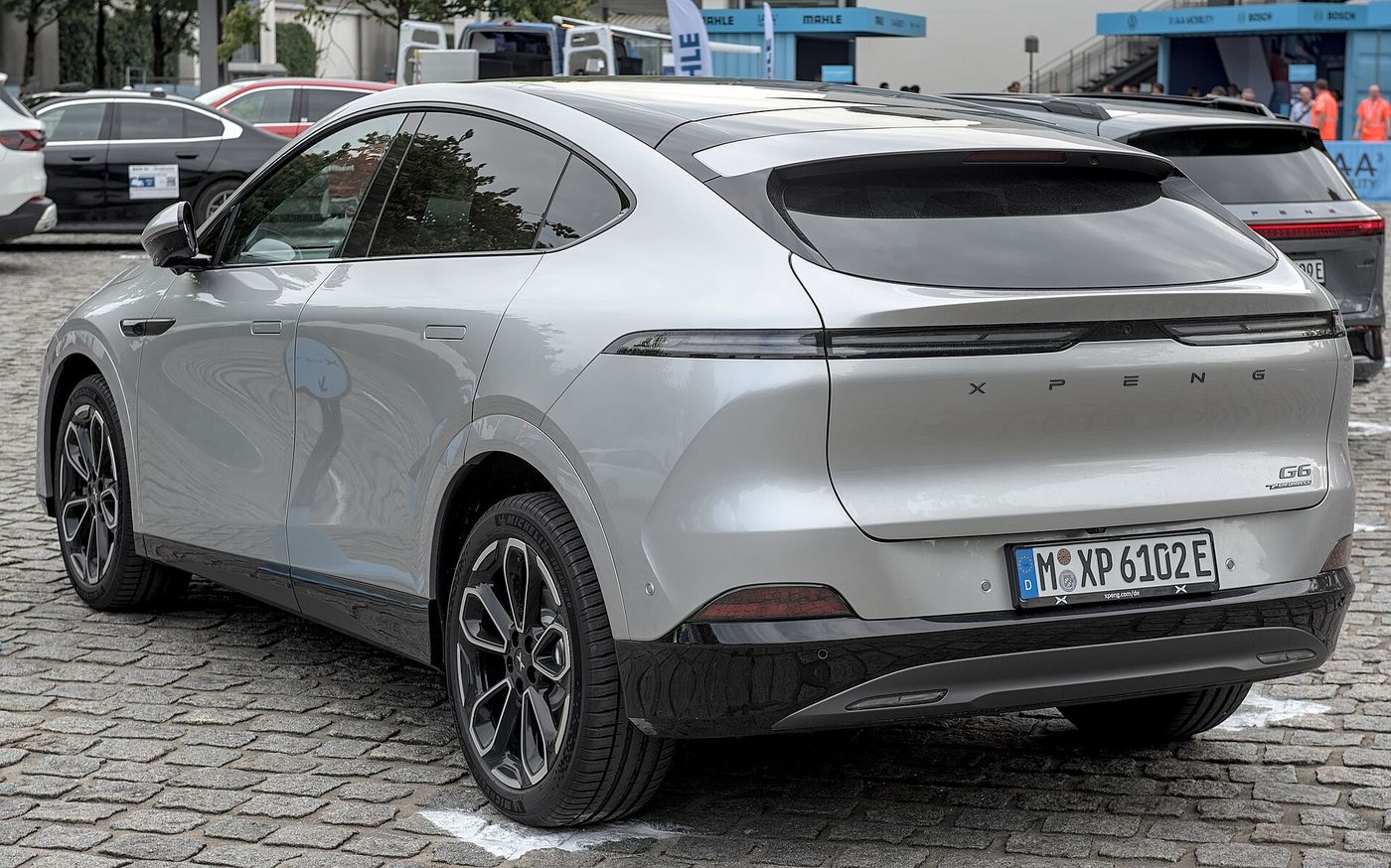
The G6 mainstream smart SUV, built on the SEPA 2.0 architecture, is launched.[8]
Volkswagen Group announces an investment of about US$700 million for a 4.99% stake in XPeng; the two plan to co-develop two VW-brand mid-size B-segment EVs based on XPeng's G9 platform, targeting launch in 2026.[23][19]
XPeng signs a share purchase agreement with Didi and its subsidiary Da Vinci Auto to acquire all issued shares of Xiaoju Smart Auto (Didi's smart EV development business) for newly issued Class A shares.[23]
First closing of the Didi acquisition completes; XPeng issues 58,164,217 Class A shares to Didi, and the acquired business becomes a wholly-owned subsidiary consolidated into XPeng's results.[23]
Volkswagen completes its subscription of XPeng shares for about US$705.6 million, taking a 4.99% stake.[19][23]
According to a Gasgoo report reprinted by China Economic Net, co-founders Xia Heng and He Tao step back from core management to become lifetime honorary advisors, leaving a three-person core leadership of He Xiaopeng, Wang Fengying and Brian Gu.[21]
XPeng and Volkswagen sign a joint development agreement for the CEA electronic/electrical architecture, co-developing it for VW's CMP and MEB platforms in China.[23]
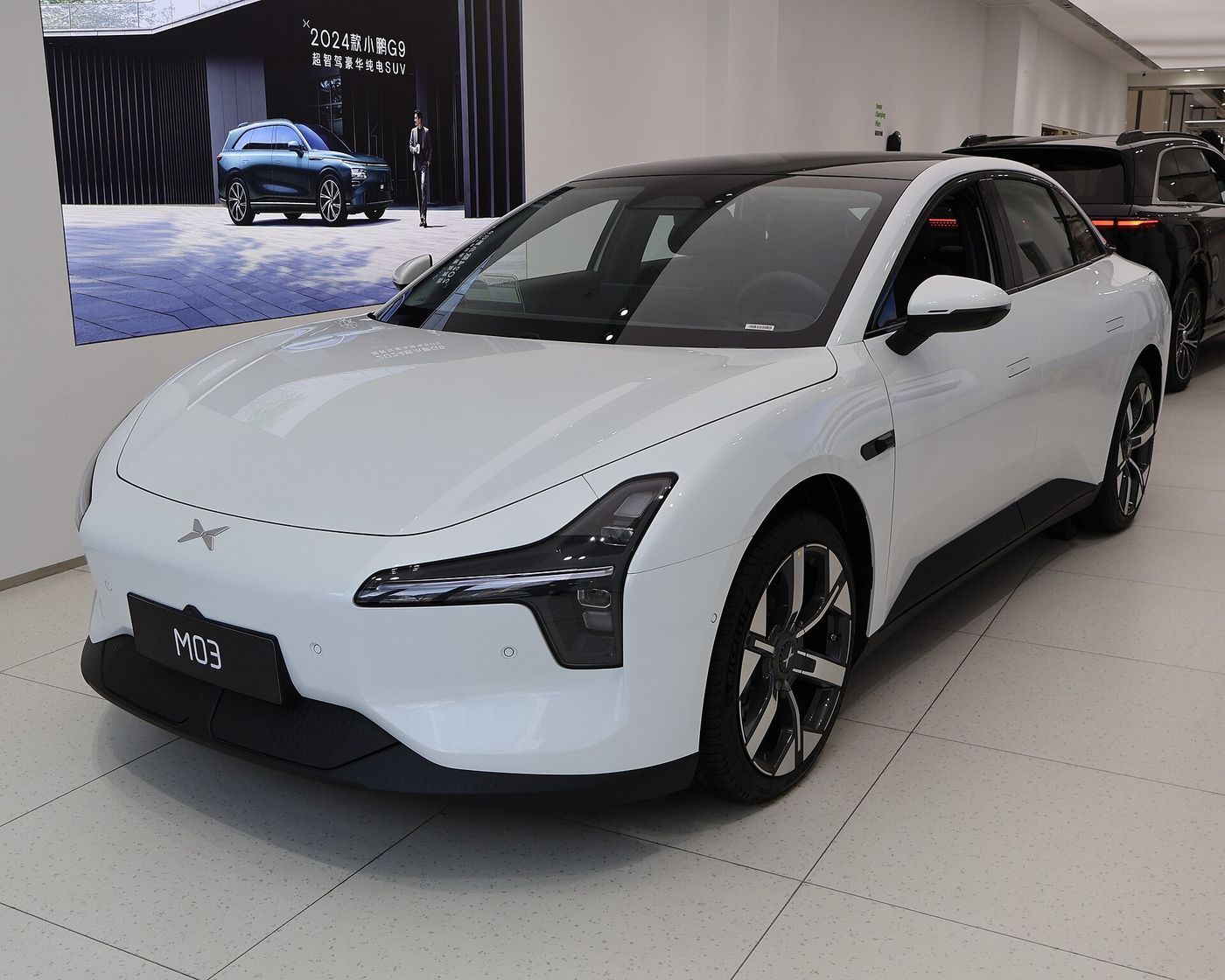
The MONA M03 sedan launches in China from RMB119,800; the same month the SOP closing of the Didi agreement completes, with 4,636,447 Class A shares issued to Didi.[23][18]
XPeng and Volkswagen sign an expanded E/E architecture agreement, extending CEA to VW's battery-electric, ICE and PHEV platforms in China.[23]
The XPeng X9 Super Range Extender (EREV) launches from RMB309,800 with a CLTC combined range of 1,602 km, XPeng's first range-extender model; the EREV powertrain later expands to more models.[22]
XPeng reports FY2025 results: 429,445 deliveries, revenue of RMB76.72 billion and R&D spending of RMB9.49 billion, with Q4 2025 its first profitable quarter (net profit of RMB0.38 billion).[1][11]
The company's Chinese name changes from Xiaopeng Motors to Xiaopeng Group; the English name XPeng Inc. is unchanged.[15]
Current operations
Business structure
Vehicle sales dominate revenue. In FY2025 vehicle sales were RMB68.38 billion (about 89.1% of total revenue) and services and other revenue was RMB8.34 billion (10.9%), the latter including technical R&D services tied to the Volkswagen collaboration.[1] Vehicle sales grew 90.8% year over year while services and other revenue grew 65.6%, so the latter grew more slowly than vehicle sales.[1][1][7][10][13][14][15][17][19][22][23][8]
R&D spending reached RMB9.49 billion in 2025, up 47.0% year over year, directed at new models, the second-generation VLA driving system and physical AI.[15] Services and other revenue includes technical R&D services and accessories sales.[1] Beyond cars, XPeng is building a physical-AI portfolio: robotaxis and the IRON humanoid robot — its robotics subsidiary Dogotix signed a share purchase agreement for about US$900 million on 24 August 2026[7] — as well as flying cars through affiliate XPeng AeroHT, in which XPeng holds a minority preferred-equity interest accounted for as debt securities, so AeroHT is not consolidated into the listed company's results.[23][17] As of the research cut-off, the latest reported quarter is Q2 2026, with revenue of RMB19.74 billion, gross margin of 20.7% and a net loss of RMB1.34 billion.[7][1][7][10][13][14][15][17][19][22][23][8]
Core technology
XPeng develops its full smart-driving stack in-house: the Turing AI chip, the second-generation VLA (vision-language-action) model and the XNGP assisted-driving system; in March 2026 it released the X-World world-model technical report, used for closed-loop simulation, online reinforcement learning and data generation.[15] The X9 Super Range Extender, launched in November 2025 (from RMB309,800, CLTC combined range of 1,602 km), opened the "pure-EV plus EREV" dual-powertrain route, extended to more models from 2026.[22][13] On charging, its models use an 800V high-voltage silicon-carbide platform with 5C ultra-fast charging.[15][1][7][10][13][14][15][17][19][22][23][8]
Factories and capacity
According to its 2025 Form 20-F, XPeng manufactures vehicles mainly at its self-built plants in Zhaoqing and Guangzhou, Guangdong province. As of 31 March 2026, construction of the Wuhan manufacturing base was complete, the relevant government authorities had completed inspection and acceptance, and the base had obtained its property ownership certificate. This disclosure does not confirm that vehicle production had begun in Wuhan or specify combined annual capacity for the three bases.[8] It is headquartered in Guangzhou with R&D centers in Beijing, Shanghai, Shenzhen, Zhaoqing and Yangzhou, a US R&D center and branches across Europe.[15][1][7][10][13][14][15][17][19][22][23][8]
Domestic position
Full-year 2025 deliveries were 429,445 vehicles, up 125.9% year over year, with Q4 2025 deliveries of 116,249 units a quarterly record.[10][15] As of 30 June 2026 its physical sales network had 740 stores covering 257 cities, and its self-operated charging network reached 3,780 stations including 2,720 ultra-fast charging stations.[7][1][7][10][13][14][15][17][19][22][23][8]
Overseas business
In March 2026 it announced entry into the Mexican market with the global models G6 (from 819,900 Mexican pesos) and G9 (from 1,099,900 Mexican pesos), and unveiled a three-year Latin America strategy to introduce a dual pure-EV and EREV lineup in 2027.[15] On 16 July 2026 the MONA L03, MONA's first global model, held its global launch in Munich, Germany, to be sold in 65 countries and regions.[14][7] Overseas deliveries in 2025 were 45,008 units, about 10.5% of the total.[10][1][7][10][13][14][15][17][19][22][23][8]
Volkswagen partnership
In July 2023 Volkswagen announced an investment of about US$700 million for a 4.99% stake, with the two planning to co-develop two VW-brand B-segment EVs based on XPeng's G9 platform; Volkswagen completed the subscription for about US$705.6 million in December 2023.[23][19] On 22 July 2024 the two signed a joint development agreement for the CEA electronic/electrical architecture for VW's CMP and MEB platforms in China.[23] In January 2025 they signed an MoU to jointly build an ultra-fast charging network in China covering 420 cities and over 20,000 charging terminals.[23] In August 2025 they expanded the E/E architecture agreement to cover VW's battery-electric, ICE and PHEV platforms in China, and in March 2026 their first jointly developed model (「与众 08」) entered production at Volkswagen Anhui as planned, equipped as standard with XPeng's VLA assisted-driving system and Turing AI chip.[23][15][1][7][10][13][14][15][17][19][22][23][8]
Brand portfolio
| Brand | Positioning | Price band | Founded | Ownership | Status | Sources |
|---|---|---|---|---|---|---|
| 小鹏 / XPeng | The company's core smart EV brand, spanning sedans, SUVs and MPVs from the mass market to the premium segment. | China guide prices roughly RMB120,000–370,000 across models (as of 2026) | 2014 | Wholly owned by XPeng Inc. The lineup includes the P7 and P7+ sedans, G6, G7, G9, G9L and GX SUVs, the X9 MPV, and the MONA M03/L03 models (branded under XPeng). The X9 Super Range Extender launched in November 2025 (CLTC combined range of 1,602 km) marked the start of EREV power; in January 2026 EREV expanded to more models, with the 2026 P7+ from RMB186,800, G7 from RMB195,800, G6 from RMB176,800 and G9 from RMB248,800. | active | [13][14][12][22] |
| MONA / MONA | Smart EV line positioned in the RMB100,000–160,000 mass market, aimed at younger buyers; originally positioned as an independent brand, later integrated as a lineup under the XPeng brand. | MONA M03 from RMB119,800 (China); MONA L03 from RMB123,800 (China) | 2024 | Originates from XPeng's acquisition of Didi Global's smart EV business, agreed in August 2023 with first closing in November 2023; "MONA" was the project name at the time of the acquisition, and the brand was launched in 2024. The MONA M03 sedan launched in August 2024 from RMB119,800; the MONA L03, MONA's first global model, launched in July 2026 (to be sold in 65 countries), with L03 monthly deliveries exceeding 10,000 units in September 2026. | active | [23][18][14][12] |
Founders and leadership
Founder
He Xiaopeng is co-founder, executive director, chairman and CEO. Before joining XPeng he co-founded UC Mobile (UCWeb) in 2004, serving as its product president from January 2005 to June 2014; after UCWeb was acquired by Alibaba he worked at Alibaba from June 2014 to August 2017, including as president of its mobile business group. He joined XPeng in 2017 and holds a bachelor's degree in computer science from South China University of Technology; the company is named after him.[9] According to a Gasgoo report reprinted by China Economic Net, the company was founded in 2014 by Xia Heng, He Tao and Yang Chunlei, with He Xiaopeng initially an angel investor; in March 2024 Xia Heng and He Tao stepped back from the core management team and became lifetime honorary advisors.[21][8][9][12][21]
Key management
- He Xiaopeng — co-founder, executive director, chairman and CEO.[9][8][9][12][21]
- Wang Fengying — president, appointed January 2023. She spent 1991–2022 at Great Wall Motor, including as vice chairman (2016–2022), executive director (2001–2022) and general manager (2002–2022). She holds a master's degree in economics from Tianjin University of Finance and Economics.[9][8][9][12][21]
- Brian Gu (Hongdi Gu) — honorary vice chairman and co-president, joined March 2018. Previously he was at J.P. Morgan from 2004 to 2018, where he became chairman of Asia Pacific investment banking, and before that worked in Lehman Brothers' global M&A and healthcare practices (1998–2004).[9][8][9][12][21]
- Wu Jiaming — vice president of finance and accounting.[9][8][9][12][21]
Ownership and governance
XPeng uses a weighted-voting-rights structure: one vote per Class A share and ten votes per Class B share.[8] According to the 2025 annual report, as of 31 March 2026 the company had 1,911,658,601 ordinary shares outstanding, comprising 1,562,950,344 Class A ordinary shares and 348,708,257 Class B ordinary shares. This excludes 2,195,880 Class A ordinary shares issued to the depositary bank for bulk issuance of ADSs and reserved for future issuance upon exercise or vesting of awards under the 2019 Plan and 2025 Scheme; He Xiaopeng held 18.8% of shares and 69.3% of voting power, Volkswagen Group about 4.9% (about 1.9% voting power), J.P. Morgan about 5.7% (about 2.2% voting power), BlackRock about 4.4%, and Brian Gu about 1.9%.[8] The board consists of executive director He Xiaopeng, non-executive director Fu Jixun, and independent non-executive directors Yang Donghao, Qu Fang, Zhang Hongjiang and Chen Yudong.[12][8][9][12][21]
Financials
| Fiscal year | Revenue | Gross margin (%) | Net profit attributable to parent | R&D | Sources |
|---|---|---|---|---|---|
| 2021 | 20,988 | 12.5 | -4,863 | 4,114 | [6][5] |
| 2022 | 26,855 | 11.5 | -9,139 | 5,215 | [4][5] |
| 2023 | 30,676 | 1.5 | -10,376 | 5,277 | [3] |
| 2024 | 40,866 | 14.3 | -5,790 | 6,457 | [2] |
| 2025 | 76,720 | 18.9 | -1,139 | 9,490 | [1] |
Fiscal year ends December 31. Figures are under U.S. GAAP, in RMB millions, taken from XPENG's earnings releases and annual results announcements, and rounded to the nearest RMB million as disclosed in the respective statements. 'net_profit' is the net loss attributable to ordinary shareholders of XPeng Inc. (the parent-company basis). XPeng has no significant non-controlling interests, so the loss attributable to ordinary shareholders is essentially equal to the consolidated net loss. In FY2025 the net loss attributable to ordinary shareholders was RMB1.14 billion (about RMB1,139 million), while Q4 2025 was the first profitable quarter with a net profit of RMB0.38 billion. FY2021 figures use the 2021 annual results release and the FY2021 comparatives disclosed in the FY2022 results. The FY2021 results announcement is dated 28 March 2022; the official webpage linked as s6 was published on 29 March 2022.
Competition
Main competitors
Our judgment: XPeng competes in China's smart EV market against Tesla, BYD, Li Auto, NIO, Zeekr and Huawei-backed brands. Its MONA line targets the RMB100,000–160,000 mass market, while the G6/G7/G9/GX SUVs, P7 sedans and X9 MPV compete across mainstream and premium segments.[10][1] Its Volkswagen technology partnership sets XPeng apart from most Chinese peers in the model of licensing technology to a foreign automaker.[1][1][7][10][12][13][15][22][23][24]
Our judgment: strengths
- An in-house smart-driving stack (Turing chip, VLA 2.0, XNGP) and a first-mover position in technology licensing — the Volkswagen collaboration brings technical R&D services revenue, and services and other revenue reached RMB8.34 billion in FY2025.[1][1][7][10][12][13][15][22][23][24]
- Strong volume growth (deliveries up 125.9% in 2025) driven by the MONA M03 and new models, with gross margin recovering to 18.9% in FY2025 and 20.7% in Q2 2026.[1][7][1][7][10][12][13][15][22][23][24]
- The range-extender move, which began with the X9 Super Range Extender in November 2025 and expanded to more models from 2026, broadens its addressable market beyond the pure-EV segment.[22][13][1][7][10][12][13][15][22][23][24]
- Sales and service channels: from March 2026 the second-generation VLA opened test drives at 732 stores nationwide, supported by 800V/5C ultra-fast charging and facilities such as the X-Energy megawatt flash-charging station in Hong Kong.[15][12][1][7][10][12][13][15][22][23][24]
Our judgment: weaknesses
- Still loss-making: FY2025 net loss attributable to ordinary shareholders was RMB1.14 billion and Q2 2026 net loss RMB1.34 billion, despite a first quarterly profit in Q4 2025.[1][7][1][7][10][12][13][15][22][23][24]
- Our judgment: delivery scale remains a weakness relative to Tesla. In 2025 XPeng delivered 429,445 vehicles, compared with Tesla's 1,636,129 vehicles worldwide; both figures measure full-year vehicle deliveries.[10][24][1][7][10][12][13][15][22][23][24]
- Low overseas share: 45,008 overseas deliveries in 2025, about 10.5% of the total, leaving the overseas business at an early stage.[10][1][7][10][12][13][15][22][23][24]
- Our judgment: the scope and timing of Volkswagen projects are variables for service revenue. FY2025 services and other revenue totaled RMB8.34 billion, including technical R&D services and parts and accessories sales; this aggregate does not quantify dependence on the Volkswagen collaboration.[1][23][1][7][10][12][13][15][22][23][24]
Our judgment
Our judgment: XPeng's core strength is its in-house full-stack smart-driving capability and its ability to license technology to Volkswagen, which differentiates it among Chinese EV startups. Sustained profitability still hinges on keeping MONA volumes and vehicle margins up amid fierce price competition and on gradually turning the group's physical-AI R&D into revenue. The flying-car business is run by affiliate XPeng AeroHT, in which XPeng holds a minority preferred-equity interest accounted for as debt securities; AeroHT's R&D, capital expenditure and sales revenue are not consolidated into the listed company, so AeroHT's investment and revenue should not be treated as direct determinants of XPeng Group's profit or loss.[7][23][1][7][10][12][13][15][22][23][24]
Outlook
Company goals
Chairman and CEO He Xiaopeng has described three growth curves — AI plus cars, going global, and humanoid robots — and said the company is at a turning point in applying physical AI, aiming to move from L2+ assisted driving toward L4 autonomy, take its second-generation VLA overseas and mass-produce humanoid robots.[1] For Q3 2026 the company guided deliveries of 115,000–121,000 vehicles and total revenues of RMB21.7 billion–RMB23.4 billion; actual Q3 2026 deliveries were 118,390.[7][12][1][7][12][14][23][8][22][25]
In its 24 August 2026 results release, the company reported development milestones for the mass-production version of its humanoid robot. It also disclosed that robotics subsidiary Dogotix had signed a share purchase agreement that day, under which subscribers conditionally agreed to buy newly issued shares for an aggregate US$900 million; signing does not establish that the financing had closed.[7] XPeng and Volkswagen have expanded their E/E architecture collaboration to cover VW's battery-electric, ICE and PHEV platforms in China.[23] In its 21 April 2026 announcement, Volkswagen Group said it planned to introduce the next-generation CEA 2.0 architecture from 2027 and gradually extend it to vehicles of all powertrain types.[25][1][7][12][14][23][8][22][25]
Our analysis
Our judgment: the direction of rising volume, recovering margins and overseas expansion is supported by XPeng's disclosed data and by launches such as the MONA L03 and the G9L, but whether 2026 turns profitable depends on conditions that are not guaranteed — sustaining MONA volumes in a fiercely price-competitive market, converting heavy physical-AI R&D into revenue, and absorbing overseas tariffs and localization costs. If the company increases spending on EREV development, production lines and overseas channels without corresponding growth in volume or gross profit, additional expenses could offset operating improvements and the full year could remain loss-making. Conversely, disciplined spending and higher model volumes could narrow losses.[7][14][1][7][12][14][23][8][22][25]
Our judgment: price competition, overseas tariffs and localization requirements, and the timing of technology-collaboration projects are key variables in these profitability scenarios. Services and other revenue covers multiple activities, and the disclosures do not establish a precise Volkswagen collaboration share; project timing could affect service revenue, but the aggregate category cannot quantify that effect. The founder's voting power substantially exceeds his shareholding, limiting other shareholders' relative influence on ordinary shareholder votes. If EREV models fail to bring corresponding volumes, returns on R&D and capacity investment could also fall. These are analyses of disclosed revenue composition, voting rights and product changes, rather than reported operating outcomes.[1][7][8][22][1][7][12][14][23][8][22][25]
Risks
- Operations and funding: FY2025 net loss attributable to ordinary shareholders was RMB1.14 billion and Q2 2026 net loss was RMB1.34 billion. Cash reserves were RMB40.48 billion as of 30 June 2026.[1][7][1][7][8][10][22]
- R&D spending: FY2025 R&D spending was RMB9.49 billion. Q2 2026 R&D expenses were RMB2.91 billion, up 32.1% year over year, which the company primarily attributed to development expenses for new models and AI-related technologies.[1][7][1][7][8][10][22]
- Overseas business: Overseas deliveries in 2025 were 45,008 vehicles, about 10.5% of total deliveries. The 2025 annual report discloses international trade policy and overseas expansion risks.[10][8][1][7][8][10][22]
- Shareholding and voting power: As of 31 March 2026, He Xiaopeng held 18.8% of shares and 69.3% of voting power. The weighted-voting-rights structure gives one vote to each Class A share and ten votes to each Class B share.[8][1][7][8][10][22]
- Collaboration revenue: FY2025 services and other revenue totaled RMB8.34 billion, including technical R&D services and parts and accessories sales.[1][1][7][8][10][22]
- Powertrain strategy: The X9 Super Range Extender launched in November 2025, extending the company's product portfolio from battery-electric vehicles to both battery-electric and extended-range vehicles.[22][1][7][8][10][22]
Sources
- XPENG Reports Fourth Quarter and Fiscal Year 2025 Unaudited Financial Results Tier A ·
- XPENG Reports Fourth Quarter and Fiscal Year 2024 Unaudited Financial Results Tier A ·
- XPENG Reports Fourth Quarter and Fiscal Year 2023 Unaudited Financial Results Tier A ·
- XPENG Reports Fourth Quarter and Fiscal Year 2022 Unaudited Financial Results Tier A ·
- 小鹏汽车 截至2022年12月31日止年度全年业绩公告 (HKEX) Tier A ·
- 小鹏汽车发布Q4及全年财报:全年营收超200亿(2021财年) Tier A ·
- XPENG Reports Second Quarter 2026 Unaudited Financial Results Tier A ·
- XPeng Inc. 2025 Annual Report on Form 20-F (SEC) Tier A ·
- XPENG 高级管理层 (投资者关系;发布日期未标注,查阅日期 2026-10-29 / publication date not stated, accessed 2026-10-29) Tier A ·
- XPENG Announces Vehicle Delivery Results for December and Full Year 2025 Tier A ·
- 小鹏汽车发布2025年第四季度及全年财报(公司新闻) Tier A ·
- 小鹏集团 自愿公告 2026年9月及第三季度智能车交付数据 (HKEX) Tier A ·
- 2026小鹏全球新品发布会:2026款P7+、G7、G6、G9上市(公司新闻) Tier A ·
- 售价12.38万元起,小鹏MONA L03全球上市(公司新闻) Tier A ·
- 小鹏汽车3月共交付新车27,415台(含更名小鹏集团、进入墨西哥) Tier A ·
- XPENG About (official website;发布日期未标注,查阅日期 2026-10-29 / publication date not stated, accessed 2026-10-29) Tier A ·
- 小鹏汇天 (XPeng AeroHT) 官方网站(发布日期未标注,查阅日期 2026-10-29 / publication date not stated, accessed 2026-10-29) Tier A ·
- Xpeng gears up for Mona M03 deliveries (CnEVPost) Tier B ·
- 中国电动车技术受国际车企热捧(中国日报网汽车) Tier B ·
- XPENG Investor Relations(公司简介;发布日期未标注,查阅日期 2026-10-29 / publication date not stated, accessed 2026-10-29) Tier A ·
- 2联合创始人退出核心管理层?小鹏:是终身荣誉顾问(盖世汽车报道,中国经济网转载) Tier B ·
- 「全球续航最长大七座」小鹏X9超级增程正式上市(公司新闻) Tier A ·
- 小鹏集团 2025年度报告 (HKEX) Tier A ·
- Tesla Fourth Quarter 2025 Production, Deliveries & Deployments Tier A ·
- 大众汽车集团以系统化产品及科技矩阵揭开北京车展序幕:四款车型全球首秀、全域智能体AI落地(大众汽车集团中国官方公告) Tier A ·
深度研究 Deep dive
概览
小鹏集团(XPeng Inc.,纽交所:XPEV;港交所:9868)是一家总部位于广州的智能电动汽车公司,2014 年成立,自 2025 年起自称「物理 AI」公司,业务覆盖智能电动汽车、Robotaxi 与人形机器人。[20] 公司设计、开发并制造智能电动汽车,收入主要来自整车销售,其余来自技术研发服务、充电及相关服务。[1] 自 2026 年 4 月 1 日起,其中文名称由「小鹏汽车」变更为「小鹏集团」,英文名称 XPeng Inc. 不变。[15][1][8][10][15][20]
小鹏披露的自研智能驾驶技术包括图灵 AI 芯片与第二代 VLA 智驾模型;公司通过与大众汽车集团的技术合作获得技术研发服务收入。[20][1] 2025 年公司交付 42.94 万辆(同比增长 125.9%),其中海外交付 4.50 万辆,营收 767.2 亿元;第四季度首次实现单季盈利,但全年仍处亏损。[10] 该季度营收 222.5 亿元、毛利率 21.3%、交付 116,249 台,均创历史新高。[15][1][8][10][15][20]
品牌结构以「小鹏」品牌为核心,MONA 系列(源于 2023 年收购滴滴智能电动汽车业务)主攻大众市场,另通过关联企业小鹏汇天(XPeng AeroHT)将产品矩阵从汽车延伸至飞行汽车。大众汽车集团持有小鹏约 4.9% 股权,是公司股东与技术合作伙伴。[8][1][8][10][15][20]
关键数据卡
- 总部
- 中国广东省广州市[20]
- 创始人持股与投票权
- 何小鹏:持股 18.8%、投票权 69.3%(截至 2026-03-31)[8]2026-03-31
- 上市地点与代码
- 纽交所:XPEV;港交所:9868(双重主要上市)[20]
- 员工数
- 19,884 人[8]2025-12-31
- 营收(2025 财年)
- 人民币 767.2 亿元[1]FY2025
- 净亏损(归母,2025 财年)
- 人民币 -11.4 亿元[1]FY2025
- 销量(2025 年)
- 42.94 万辆[10]2025
- 海外销量(2025 年)
- 4.50 万辆[10]2025
- 毛利率(2025 财年)
- 18.9%[1]FY2025
- 研发投入(2025 财年)
- 人民币 94.9 亿元[1]FY2025
- 现金储备(2026-06-30)
- 人民币 404.8 亿元[7]2026-06-30
历史沿革
据盖世汽车报道(中国经济网转载),夏珩、何涛、杨春雷在广东广州创立小鹏汽车,专注智能电动汽车,公司以「小鹏」命名;何小鹏作为天使投资人早期参与。[16][21]
何小鹏离开阿里巴巴,正式加入小鹏汽车出任董事长,全面负责公司战略。[9]
首款量产车型 G3 上市并开启批量交付。[8]
首款中型轿车 P7 上市,成为此后数年主力走量车型。[8]
美国存托股份在纽约证券交易所上市,代码 XPEV,募资规模当时创全球新能源汽车行业 IPO 纪录。[15]
在香港联交所主板双重主要上市,股份代号 9868,成为首个在港美两地双重主要上市的中国造车新势力。[15]
旗舰 SUV G9 上市;全年交付 120,757 辆,同比增长 23%。[5]
原长城汽车副董事长、总经理王凤英出任总裁,负责产品规划、产品矩阵与销售。[9]
基于 SEPA 2.0 扶摇架构的主流智能 SUV G6 上市。[8]
大众汽车集团宣布投资约 7 亿美元、获小鹏约 4.99% 股权,双方计划基于小鹏 G9 平台共同开发两款大众品牌 B 级纯电车型,目标 2026 年推向市场。[23][19]
与滴滴及其全资子公司 Da Vinci Auto 签署购股协议,以新发行 A 类普通股收购 Xiaoju Smart Auto 全部股本(即滴滴智能汽车开发业务)。[23]
完成对滴滴智能汽车开发业务资产的首次交割,向滴滴发行 58,164,217 股 A 类普通股,标的业务成为全资附属公司并纳入合并报表。[23]
据盖世汽车报道(中国经济网转载),联合创始人夏珩、何涛淡出核心管理层,转为终身荣誉顾问,核心管理层由何小鹏、王凤英、顾宏地三人组成。[21]
与大众签署电子电气架构(CEA)技术战略合作联合开发协议,为大众在华 CMP 与 MEB 平台联合开发电子电气架构。[23]
MONA 首款车型 M03 在中国上市,起售价 11.98 万元;同月完成滴滴购股协议 SOP 交割,向滴滴发行 4,636,447 股 A 类普通股。[23][18]
与大众签署扩大电子电气架构合作协议,将 CEA 架构合作扩展至大众在华纯电、燃油与插混平台。[23]
小鹏 X9 超级增程正式上市(30.98 万元起),CLTC 综合续航 1602 公里,为小鹏首款增程(EREV)车型,此后增程动力扩展至更多车型。[22]
发布 2025 年财报:全年交付 429,445 辆、营收 767.2 亿元、研发投入 94.9 亿元,第四季度首次实现单季盈利(净利润 3.8 亿元)。[1][11]
公司中文名称由「小鹏汽车有限公司」变更为「小鹏集团」,英文名称 XPeng Inc. 不变。[15]
现状
业务结构
整车销售是收入主体。2025 财年汽车销售收入 683.8 亿元(约占营收 89.1%),服务及其他收入 83.4 亿元(10.9%),后者包含与大众合作相关的技术研发服务收入。[1] 其中汽车销售收入同比增长 90.8%,服务及其他收入同比增长 65.6%,后者增速慢于汽车销售。[1][1][7][10][13][14][15][17][19][22][23][8]
2025 年研发投入达 94.9 亿元,同比增长 47.0%,投向新车型、第二代 VLA 智驾系统与物理 AI。[15] 服务及其他收入包含技术研发服务与配件销售。[1] 在汽车之外,小鹏正构建物理 AI 业务矩阵:Robotaxi 与人形机器人 IRON(机器人子公司 Dogotix 于 2026 年 8 月 24 日签署约 9 亿美元购股协议[7]),以及通过关联企业小鹏汇天布局的飞行汽车——小鹏对汇天持少数优先股权益并按债务证券核算,汇天不并入上市公司报表。[23][17] 截至研究截止日,公司已公布的最近季度业绩为 2026 年第二季度:单季营收 197.4 亿元、毛利率 20.7%、净亏损 13.4 亿元。[7][1][7][10][13][14][15][17][19][22][23][8]
核心技术
小鹏坚持全栈自研智能驾驶:自研图灵 AI 芯片、第二代 VLA(视觉-语言-动作)智驾模型与 XNGP 全场景智能辅助驾驶系统;2026 年 3 月发布世界模型 X-World 技术报告,用于闭环仿真、在线强化学习与数据生成。[15] 2025 年 11 月 X9 超级增程上市(30.98 万元起、CLTC 综合续航 1602 公里),开启「纯电+增程」双动力路线,2026 年起增程扩展至更多车型。[22][13] 补能方面,车型采用 800V 高压 SiC 碳化硅平台与 5C 超快充能力。[15][1][7][10][13][14][15][17][19][22][23][8]
工厂与产能
据 2025 年 Form 20-F,小鹏主要在广东肇庆、广州的自建工厂生产整车。截至 2026 年 3 月 31 日,武汉制造基地已完成建设,通过有关政府部门验收并取得产权证;该披露未确认武汉基地已开始整车生产,也未给出三基地合计年产能。[8] 公司总部位于广州,在北京、上海、深圳、肇庆、扬州等地设有研发中心,在美国设有研发中心、在欧洲多地设有分公司。[15][1][7][10][13][14][15][17][19][22][23][8]
国内市场地位
2025 年全年交付 429,445 辆,同比增长 125.9%,其中第四季度交付 116,249 辆,创单季新高。[10][15] 截至 2026 年 6 月 30 日,小鹏实体销售网络共有 740 家门店、覆盖 257 个城市,自营充电站网络达 3,780 座,其中超快充站 2,720 座。[7][1][7][10][13][14][15][17][19][22][23][8]
海外业务
2026 年 3 月宣布正式进入墨西哥市场,发布 G6(起售 819,900 墨西哥比索)、G9(起售 1,099,900 墨西哥比索)两款全球车型,并提出「领航拉美智行三年战略」,计划 2027 年在拉美引入纯电与增程双动力矩阵。[15] 2026 年 7 月 16 日,MONA 首款全球车型 L03 在德国慕尼黑举行全球上市发布会,面向 65 个国家和地区销售。[14][7] 2025 年海外交付 45,008 辆,约占总交付的 10.5%。[10][1][7][10][13][14][15][17][19][22][23][8]
与大众的技术合作
2023 年 7 月大众宣布投资约 7 亿美元、拟获小鹏约 4.99% 股权,双方计划基于小鹏 G9 平台共同开发两款大众品牌 B 级纯电车型;2023 年 12 月大众以约 7.056 亿美元完成认购。[23][19] 2024 年 7 月 22 日双方签署电子电气架构(CEA)技术战略合作联合开发协议,为大众在华 CMP 与 MEB 平台联合开发电子电气架构。[23] 2025 年 1 月双方签署谅解备忘录,联合在华建设超快充网络,覆盖 420 个城市、超过 20,000 个充电终端。[23] 2025 年 8 月双方签署扩大电子电气架构合作协议,将 CEA 合作扩展至大众在华纯电、燃油与插混平台;2026 年 3 月,双方首款联合开发车型「与众 08」在大众安徽按计划投产,标配小鹏 VLA 全场景智能驾驶辅助系统与图灵 AI 芯片。[23][15][1][7][10][13][14][15][17][19][22][23][8]
品牌矩阵
| 品牌 | 定位 | 价格带 | 创立年份 | 所属主体与持股 | 状态 | 出处 |
|---|---|---|---|---|---|---|
| 小鹏 / XPeng | 公司核心智能电动汽车品牌,覆盖从大众市场到高端的轿车、SUV 与 MPV。 | China guide prices roughly RMB120,000–370,000 across models (as of 2026) | 2014 | 小鹏集团全资持有。现有车型包括 P7、P7+ 轿车,G6、G7、G9、G9L、GX 等 SUV,X9 MPV,以及归入小鹏品牌的 MONA M03/L03。2025 年 11 月 X9 超级增程上市(CLTC 综合续航 1602 公里),开启增程动力;2026 年 1 月增程扩展至更多车型,2026 款 P7+ 起售 18.68 万元、G7 起售 19.58 万元、G6 起售 17.68 万元、G9 起售 24.88 万元。 | active | [13][14][12][22] |
| MONA / MONA | 定位 10 万–16 万元大众市场的智能电动车系列,面向年轻用户;最初定位为独立品牌,后整合为小鹏品牌下的产品系列。 | MONA M03 from RMB119,800 (China); MONA L03 from RMB123,800 (China) | 2024 | 源于小鹏 2023 年 8 月签署、11 月首次交割的对滴滴智能电动汽车业务的收购;「MONA」在 2023 年收购时为项目名称,2024 年作为新品牌推出。MONA M03 轿车 2024 年 8 月上市(起售 11.98 万元);MONA 首款全球车型 L03 于 2026 年 7 月上市(面向 65 国销售),2026 年 9 月 L03 单月交付破万辆。 | active | [23][18][14][12] |
创始人与管理层
创始人
何小鹏为联合创始人、执行董事、董事长兼首席执行官。加入小鹏前,他 2004 年联合创立 UC 优视,2005 年 1 月至 2014 年 6 月任产品总裁;UC 被阿里巴巴收购后,他于 2014 年 6 月至 2017 年 8 月在阿里巴巴任职,包括担任移动事业群总裁。2017 年加入小鹏,持有华南理工大学计算机科学学士学位,公司名称即取自其名字。[9] 据盖世汽车报道(中国经济网转载),公司 2014 年由夏珩、何涛、杨春雷创立,何小鹏最初为天使投资人;2024 年 3 月夏珩、何涛淡出核心管理层,转为终身荣誉顾问。[21][8][9][12][21]
核心管理层
- 何小鹏 — 联合创始人、执行董事、董事长兼首席执行官。[9][8][9][12][21]
- 王凤英 — 总裁,2023 年 1 月出任。1991–2022 年在长城汽车任职,包括 2016–2022 年任副董事长、2001–2022 年任执行董事、2002–2022 年任总经理。持有天津财经大学经济学硕士学位。[9][8][9][12][21]
- 顾宏地 — 名誉副董事长兼联席总裁,2018 年 3 月加入。此前 2004–2018 年在摩根大通任职,曾任亚太区投资银行主席;更早在雷曼兄弟从事全球并购与医疗业务(1998–2004)。[9][8][9][12][21]
- 吴佳铭 — 财务与会计副总裁。[9][8][9][12][21]
股权与治理
小鹏采用不同投票权架构:每股 A 类股一票、每股 B 类股十票。[8] 据 2025 年年报,截至 2026 年 3 月 31 日,公司在外流通普通股为 1,911,658,601 股,其中 A 类普通股 1,562,950,344 股、B 类普通股 348,708,257 股;该口径不包括已发行给存托银行、用于批量发行 ADS 并预留待 2019 年计划及 2025 年计划所授奖励行权或归属时使用的 2,195,880 股 A 类普通股。何小鹏持股 18.8%、拥有 69.3% 投票权,大众集团持股约 4.9%(投票权约 1.9%),摩根大通约 5.7%(投票权约 2.2%),贝莱德约 4.4%,顾宏地约 1.9%。[8] 董事会由执行董事何小鹏,非执行董事符绩勋,以及独立非执行董事杨东皓、瞿芳、张宏江、陈玉东组成。[12][8][9][12][21]
财务数据
| 财年 | 营收 | 毛利率(%) | 归母净利润 | 研发投入 | 出处 |
|---|---|---|---|---|---|
| 2021 | 20,988 | 12.5 | -4,863 | 4,114 | [6][5] |
| 2022 | 26,855 | 11.5 | -9,139 | 5,215 | [4][5] |
| 2023 | 30,676 | 1.5 | -10,376 | 5,277 | [3] |
| 2024 | 40,866 | 14.3 | -5,790 | 6,457 | [2] |
| 2025 | 76,720 | 18.9 | -1,139 | 9,490 | [1] |
财年截至 12 月 31 日。数据按美国通用会计准则(US GAAP)、人民币百万元计,取自小鹏各年业绩公告及年度业绩公告,数字按报表四舍五入至百万元。「net_profit」为归属于小鹏集团普通股股东的净亏损(归母口径);小鹏无重大非控股权益,故归母净亏损与合并净亏损基本一致。2025 财年归母净亏损为人民币 11.4 亿元(约 11.39 亿元),其中第四季度为公司首个盈利季度(净利润 3.8 亿元)。2021 财年数字取自 2021 年业绩公告及 2022 年业绩公告中的对比数据。 2021 财年财报公告日期为 2022 年 3 月 28 日;来源 s6 所链接官网网页的发布日期为 2022 年 3 月 29 日。
竞争格局
主要对手
我们的判断:小鹏在中国智能电动车市场与特斯拉、比亚迪、理想、蔚来、极氪及华为系品牌竞争。MONA 系列主攻 10 万–16 万元大众市场,G6/G7/G9/GX 等 SUV、P7 系列轿车与 X9 MPV 覆盖主流至高端市场。[10][1] 与大众的技术合作,使小鹏在「向海外车企输出技术」的模式上区别于多数中国同行。[1][1][7][10][12][13][15][22][23][24]
我们的判断:优势
- 自研智能驾驶全栈(图灵芯片、VLA 2.0、XNGP)与技术授权先发优势——与大众的合作带来技术研发服务收入,2025 财年服务及其他收入合计 83.4 亿元。[1][1][7][10][12][13][15][22][23][24]
- 销量增长强劲(2025 年同比增长 125.9%),由 MONA M03 及新车型带动,毛利率回升至 2025 财年的 18.9%、2026 年第二季度的 20.7%。[1][7][1][7][10][12][13][15][22][23][24]
- 2025 年 11 月 X9 超级增程上市、2026 年起增程扩展至更多车型,将市场覆盖面从纯电拓展至增程人群。[22][13][1][7][10][12][13][15][22][23][24]
- 销售与服务渠道:2026 年 3 月起第二代 VLA 在全国 732 家门店开放试驾,配合 800V/5C 超充与香港 X-Energy 兆瓦级闪充站等补能设施。[15][12][1][7][10][12][13][15][22][23][24]
我们的判断:短板
- 仍处亏损:2025 财年归母净亏损 11.4 亿元,2026 年第二季度净亏损 13.4 亿元,尽管 2025 年第四季度曾实现单季盈利。[1][7][1][7][10][12][13][15][22][23][24]
- 我们的判断:交付规模仍是小鹏相对特斯拉的短板。2025 年小鹏交付 429,445 辆,特斯拉全球交付 1,636,129 辆(约 163.6 万辆),两者均为全年整车交付口径。[10][24][1][7][10][12][13][15][22][23][24]
- 海外占比低:2025 年海外交付 4.50 万辆,约占总交付 10.5%,海外业务尚处早期。[10][1][7][10][12][13][15][22][23][24]
- 我们的判断:大众合作项目的范围与节奏是服务收入的变量。2025 财年服务及其他收入合计 83.4 亿元,其中包括技术研发服务及配件销售;这一合计数字不能直接用于计算对大众合作的依赖程度。[1][23][1][7][10][12][13][15][22][23][24]
我们的判断
我们的判断:小鹏的核心竞争力在于自研全栈智能驾驶与向大众输出技术的能力,这是其在「新势力」中差异化的关键;但持续盈利仍取决于在激烈价格战中维持 MONA 系列走量与整车毛利率,并将集团层面的物理 AI 研发投入逐步转化为收入。飞行汽车由关联企业小鹏汇天运营,小鹏仅持少数优先股权益并按债务证券核算,汇天的研发、资本开支与销售收入不并入上市公司报表,因此不应把汇天的投入与收入视为小鹏集团盈亏的直接决定因素。[7][23][1][7][10][12][13][15][22][23][24]
未来展望
公司目标
董事长兼 CEO 何小鹏提出三条增长曲线——AI+汽车、走向全球、具身人形机器人——并称公司正处于物理 AI 应用的历史性转折点,目标是完成从 L2+ 辅助驾驶向 L4 自动驾驶的跨越、让第二代 VLA 走向海外、实现人形机器人规模量产。[1] 对 2026 年第三季度,公司指引交付 11.5 万–12.1 万辆、营收 217 亿–234 亿元;实际第三季度交付 118,390 辆。[7][12][1][7][12][14][23][8][22][25]
公司在 2026 年 8 月 24 日业绩公告中表示,人形机器人量产版开发已取得阶段性进展;公告还披露,机器人子公司 Dogotix 当日签署购股协议,认购方有条件同意以合计 9 亿美元认购新股,协议签署并不等同融资交割完成。[7] 与大众方面,双方已将电子电气架构合作扩展至大众在华纯电、燃油及插混平台。[23] 大众汽车集团在 2026 年 4 月 21 日公告中宣布,计划自 2027 年起推出新一代 CEA 2.0 架构,并逐步覆盖所有动力类型车型。[25][1][7][12][14][23][8][22][25]
我们的分析
我们的判断:销量上升、毛利率回升与海外扩张的方向有小鹏披露的数据及 MONA L03、G9L 等上市动作支撑,但 2026 年能否扭亏取决于若干并不必然成立的条件——在价格竞争激烈的市场中维持 MONA 销量、将高额的物理 AI 研发投入转化为收入,并应对海外关税与本地化成本。如果公司扩大增程研发、产线和海外渠道投入,而销量或毛利未能同步增长,新增费用可能抵消经营改善,全年仍可能出现亏损;反之,若投入节奏受控且车型销量提升,亏损也可能收窄。[7][14][1][7][12][14][23][8][22][25]
我们的判断:价格竞争、海外关税与本地化要求、技术合作项目节奏,是上述盈利情景的主要变量。服务及其他收入包含多项业务,现有披露不足以精确量化大众合作收入占比;合作节奏变化可能影响服务收入,但不能据合计数字估算影响金额。创始人的投票权明显高于持股比例,其他股东对普通股东表决事项的影响力相对有限。增程路线若不能带来相应销量,也可能降低研发和产能投入的回报。这些均为基于已披露收入结构、投票权及产品变化的分析,并非已经发生的经营结果。[1][7][8][22][1][7][12][14][23][8][22][25]
风险
- 经营与资金:2025 财年归母净亏损 11.4 亿元、2026 年第二季度净亏损 13.4 亿元;截至 2026 年 6 月 30 日现金储备为 404.8 亿元。[1][7][1][7][8][10][22]
- 研发投入:2025 财年研发投入为 94.9 亿元;2026 年第二季度研发费用为 29.1 亿元,同比增长 32.1%,公司将增加主要归因于新车型与 AI 相关技术开发费用。[1][7][1][7][8][10][22]
- 海外业务:2025 年海外交付 45,008 辆,占总交付约 10.5%;公司在 2025 年年报中披露国际贸易政策与海外扩张风险。[10][8][1][7][8][10][22]
- 股权与投票权:截至 2026 年 3 月 31 日,何小鹏持股 18.8%、拥有 69.3% 投票权;公司采用每股 A 类股一票、B 类股十票的不同投票权架构。[8][1][7][8][10][22]
- 合作收入:2025 财年服务及其他收入合计 83.4 亿元,包含技术研发服务与配件销售。[1][1][7][8][10][22]
- 技术路线:2025 年 11 月 X9 超级增程上市,公司由纯电车型扩展至纯电与增程双动力产品。[22][1][7][8][10][22]
资料来源
- XPENG Reports Fourth Quarter and Fiscal Year 2025 Unaudited Financial Results 级别 A ·
- XPENG Reports Fourth Quarter and Fiscal Year 2024 Unaudited Financial Results 级别 A ·
- XPENG Reports Fourth Quarter and Fiscal Year 2023 Unaudited Financial Results 级别 A ·
- XPENG Reports Fourth Quarter and Fiscal Year 2022 Unaudited Financial Results 级别 A ·
- 小鹏汽车 截至2022年12月31日止年度全年业绩公告 (HKEX) 级别 A ·
- 小鹏汽车发布Q4及全年财报:全年营收超200亿(2021财年) 级别 A ·
- XPENG Reports Second Quarter 2026 Unaudited Financial Results 级别 A ·
- XPeng Inc. 2025 Annual Report on Form 20-F (SEC) 级别 A ·
- XPENG 高级管理层 (投资者关系;发布日期未标注,查阅日期 2026-10-29 / publication date not stated, accessed 2026-10-29) 级别 A ·
- XPENG Announces Vehicle Delivery Results for December and Full Year 2025 级别 A ·
- 小鹏汽车发布2025年第四季度及全年财报(公司新闻) 级别 A ·
- 小鹏集团 自愿公告 2026年9月及第三季度智能车交付数据 (HKEX) 级别 A ·
- 2026小鹏全球新品发布会:2026款P7+、G7、G6、G9上市(公司新闻) 级别 A ·
- 售价12.38万元起,小鹏MONA L03全球上市(公司新闻) 级别 A ·
- 小鹏汽车3月共交付新车27,415台(含更名小鹏集团、进入墨西哥) 级别 A ·
- XPENG About (official website;发布日期未标注,查阅日期 2026-10-29 / publication date not stated, accessed 2026-10-29) 级别 A ·
- 小鹏汇天 (XPeng AeroHT) 官方网站(发布日期未标注,查阅日期 2026-10-29 / publication date not stated, accessed 2026-10-29) 级别 A ·
- Xpeng gears up for Mona M03 deliveries (CnEVPost) 级别 B ·
- 中国电动车技术受国际车企热捧(中国日报网汽车) 级别 B ·
- XPENG Investor Relations(公司简介;发布日期未标注,查阅日期 2026-10-29 / publication date not stated, accessed 2026-10-29) 级别 A ·
- 2联合创始人退出核心管理层?小鹏:是终身荣誉顾问(盖世汽车报道,中国经济网转载) 级别 B ·
- 「全球续航最长大七座」小鹏X9超级增程正式上市(公司新闻) 级别 A ·
- 小鹏集团 2025年度报告 (HKEX) 级别 A ·
- Tesla Fourth Quarter 2025 Production, Deliveries & Deployments 级别 A ·
- 大众汽车集团以系统化产品及科技矩阵揭开北京车展序幕:四款车型全球首秀、全域智能体AI落地(大众汽车集团中国官方公告) 级别 A ·