Deep dive
Overview
SAIC MAXUS (“Maxus”, 上汽大通) is a wholly owned commercial-vehicle subsidiary of SAIC Motor Corporation (SSE: 600104), operated by SAIC Maxus Automotive Co., Ltd. It focuses on light commercial vehicles — wide-body vans, pickups, MPVs, light trucks, motorhomes and special-purpose vehicles — and on new-energy commercial vehicles, with in-house capabilities in complete vehicles, powertrains, electric-drive and battery systems and intelligent driving [1][14]. Its heritage traces to a British commercial-vehicle maker founded in 1896 that ran through the Leyland and LDV eras; in 2009 SAIC acquired the MAXUS brand and core intellectual property, and in 2011 SAIC MAXUS was officially founded, reviving the century-old European commercial-vehicle name in China [1][3].
In 2025, SAIC Maxus Automotive Co., Ltd. reported wholesale sales of 222,286 vehicles, up 25.14% year on year [4]. Under the broader SAIC Commercial Vehicle scope, overseas sales reached about 103,000 vehicles, up more than 25%; from January to November 2025, van exports ranked first and pickup exports second in the industry, making Maxus a leading Chinese light-commercial-vehicle exporter [9]. In April 2025 SAIC announced it would integrate its commercial-vehicle business around MAXUS as the core carrier of the “SAIC Commercial Vehicle” system, and in late 2025 Maxus set out a vision to become the “global leader in light commercial vehicles” [11][7].
Key facts
- Founded
- 2011 (SAIC Maxus Automotive Co., Ltd. incorporated on 8 April 2011 as Shanghai Commercial Vehicle Co., Ltd.; the MAXUS brand was launched in February 2011)[14][1]
- Brand heritage
- Traced to a British commercial-vehicle maker founded in 1896, through the Leyland and LDV eras; SAIC acquired the MAXUS brand and core intellectual property in 2009[1][3]
- Ownership
- Wholly owned subsidiary of SAIC Motor; the parent is listed on the SSE (600104), with Shanghai Automotive Industry Corporation (Group) as its controlling shareholder (63.27%) and Shanghai SASAC as its ultimate controller[14][21]
- Headquarters
- Registered at 2500 Jungong Road, Yangpu District, Shanghai; production bases in Nanjing, Wuxi and Liyang[14][1]
- Registered capital
- RMB 5.82 billion[14]
- Listing
- Not separately listed; parent SAIC Motor is listed on the SSE (600104)[14]
- Sales (2025)
- 222,286 vehicles (SAIC Maxus Automotive Co., Ltd. wholesale), up 25.14% YoY[4]2025
- Overseas sales (2025)
- About 103,000 vehicles overseas (SAIC Commercial Vehicle scope), up over 25% YoY; the official English site states 101,000 exports in 2025, or 41.2% of its 245,000 total[9][2]2025
- New-energy sales (2025)
- New-energy vehicle sales up 93% YoY; NEV share of monthly sales reached about 40% by end-2025; domestic single-month NEV penetration stayed above 50% for an extended period[13][9]2025
- Global users
- Over 1.5 million cumulative global users (disclosed at the May 2026 delivery event)[13]
History
The British commercial-vehicle heritage inherited by MAXUS is traced back to this year; the lineage later ran through the Leyland and LDV eras. This is the origin of the British heritage, not the founding year of the MAXUS brand.[1][3]
LDV Limited is founded in Britain following the Leyland DAF era, continuing the light commercial vehicle line.[3]
LDV launches a light commercial vehicle under the model name “Maxus”, the prototype for the later MAXUS V80.[1][3]
SAIC Motor acquires the MAXUS brand assets and core intellectual property of the financially distressed British van maker LDV. Per a 2012 China News Service report, SAIC's wholly owned subsidiary Shanghai Huizhong acquired LDV's light-vehicle technology and trademark IP from ECO CONCEPT LIMITED, with media reporting a total investment of about RMB3 billion.[1][3][12]
The MAXUS brand is launched in February 2011; the V80 rolls off the line in June and goes on sale in September, reviving the century-old European commercial-vehicle name in China.[1][3]
SAIC Maxus Automotive Co., Ltd. is incorporated on 8 April 2011 as Shanghai Commercial Vehicle Co., Ltd., with registered capital of RMB5.82 billion.[14]
MAXUS enters the Australian market.[2]
The G10, described as the industry's first commercial-vehicle-sector MPV concept car, debuts at the Shanghai auto show, followed by a roadshow launch at the Guangzhou auto show.[3]
The company is renamed SAIC Maxus Automotive Co., Ltd. on 5 November 2015.[14]
The brand's Chinese naming is adjusted to “上汽MAXUS / 迈克萨斯”, keeping the corporate name SAIC Maxus Automotive Co., Ltd.[16]
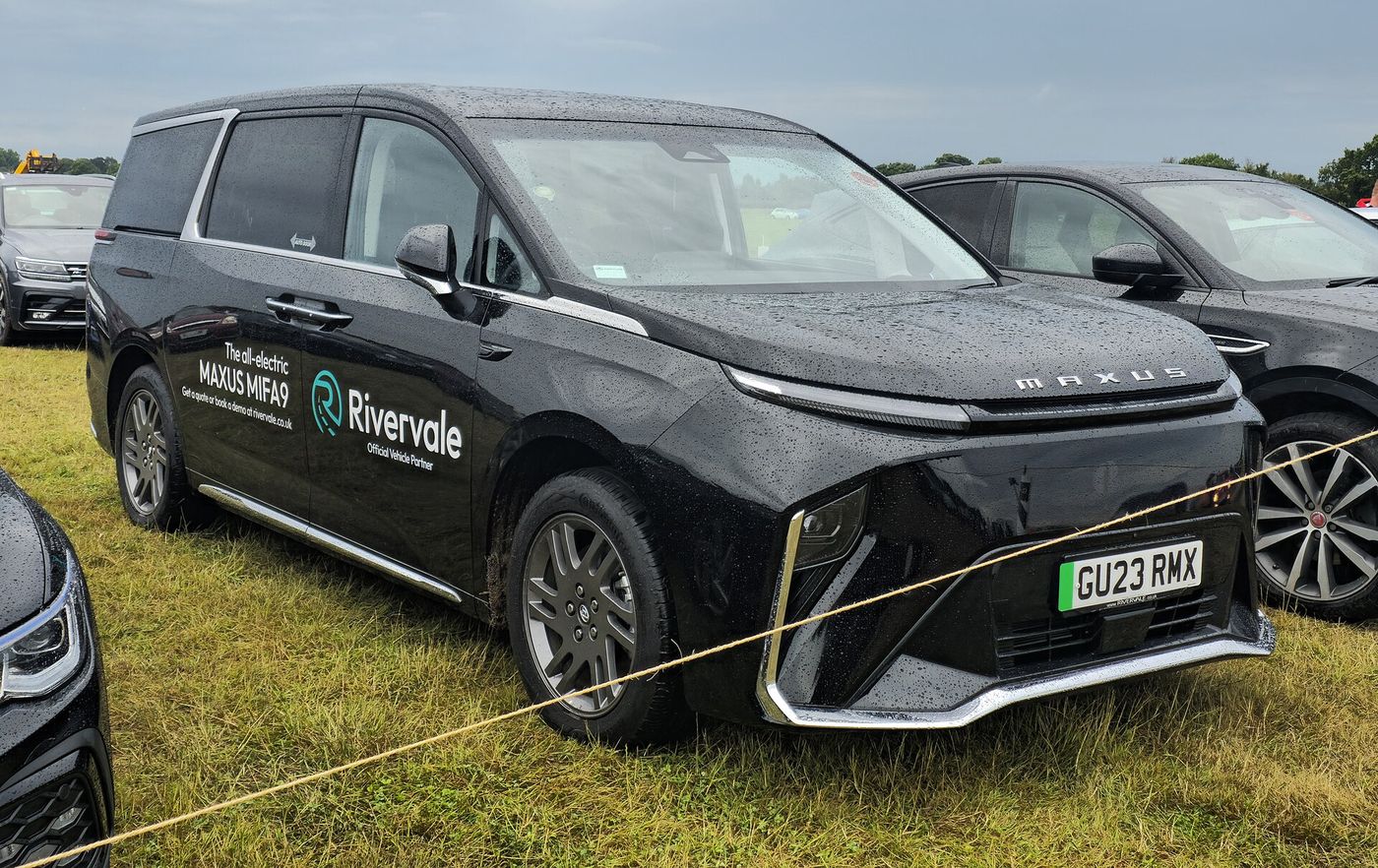
The MIFA 9 full-size pure-electric MPV is launched at RMB279,900–419,900.[6]
The Interstellar X (Xingji X) pickup launches on 18 December 2024 with fuel (RMB155,800–209,800) and pure-electric (RMB299,800–322,800) versions, using the SAIC πPlus 2.5T diesel engine and the Xingqiao (star-bridge) architecture.[17]
At the 2025 Shanghai auto show, SAIC Commercial Vehicle releases a new strategy built around SAIC MAXUS as the core carrier, vertically integrating the Maxus, Yuejin and Iveco light commercial vehicle operations, with a five-year target of doubling sales to over 500,000 units a year. Yang Huaijing becomes general manager of SAIC Maxus.[11][20]
At the Guangzhou auto show, MAXUS launches a brand refresh with the new “Zhonghui” emblem, deepens its strategic partnership with CATL, and unveils the Dana RoboVAN and RoboBUS autonomous commercial vehicles.[7][13]
SAIC Motor's board appoints Yang Huaijing (already general manager of SAIC Maxus) as a vice president of SAIC Motor.[5][10]
On 10 September 2026 the refreshed 2027 Dajia 9 EV is launched with a guide price from RMB289,900 and a limited-time offer price from RMB239,900.[18]
Current operations
Positioning and business structure
Maxus positions itself as a full-spectrum light commercial vehicle maker, covering vans, pickups, MPVs, light trucks, motorhomes and special-purpose vehicles, and operates two brands — Maxus and the Yuejin light-truck brand [14][9]. The operating company was incorporated on 8 April 2011 (as Shanghai Commercial Vehicle Co., Ltd.), has registered capital of RMB5.82 billion and is based at 2500 Jungong Road, Yangpu District, Shanghai, with branches in Wuxi, Nanjing and Lingang [14]. In 2025, SAIC Maxus Automotive Co., Ltd. posted wholesale sales of 222,286 vehicles, up 25.14%; per China Business Journal, the Maxus enterprise sold 222,000 vehicles in 2025 (up 25% for the full range), with new-energy sales up 93% and eleven consecutive months of year-on-year retail growth [4][13]. By segment in 2025, the light bus series sold 93,000 units (up 30%), pickups nearly 57,000 (up 14%), and Yuejin light trucks over 40,000 (up nearly 128%) [9]. For the first nine months of 2026, SAIC Maxus Automotive Co., Ltd. reported cumulative wholesale sales of 215,161 vehicles (up 34.03% YoY) and September sales of 31,699 vehicles (up 52.28%) [23]. A media report, on a broader Maxus-lineup basis, put September sales at 32,936 (up 52%), including 18,395 overseas (up 120%) and 11,866 new-energy (up 68%) [10].
Products and technology platforms
The line-up covers the Xintu (V80/V90) wide-body vans, the Interstellar pickup family (T60/T70/T90 and the Interstellar X large pickup), the Dajia/MIFA MPV family (G10 through G90 plus the electric Dajia 7/9), the Dana new-energy commercial vehicles (exported as the eDeliver family), and motorhomes [2]. On the technology side, Maxus relies on two in-house platforms — the Hongtu super commercial electric architecture (upgraded to Hongtu 2.0 with a sixteen-in-one e-drive, semi-solid-state battery and 800V platform) and the Xingzhan pickup platform [13][9]. The Dana super extended-range model launched in April 2026 uses a CATL 50kWh Tianxing battery, with CLTC pure-electric range of 312 km and combined range of 1,260 km [13]. In intelligent driving, the Dana RoboVAN and RoboBUS autonomous vehicles, built on the Hongtu architecture, were unveiled at the 2025 Guangzhou auto show, with batch deployment of RoboVAN planned for 2026 [7][13]. Maxus also cooperates with Huawei Qiankun on intelligent connectivity and cloud services, with the first results applied to the Interstellar pickup [11].
Manufacturing bases
Per official disclosures, Maxus has three main production bases in Nanjing, Wuxi and Liyang; the Nanjing base has been named a World Economic Forum Lighthouse Factory, and the company also has overseas manufacturing and KD assembly sites [1]. The company's official disclosure lists Wuxi, Nanjing and Lingang branches [14]. Specific capacity figures for each base are not fully disclosed in A-tier sources.
Domestic market and overseas business
Overseas is Maxus's main growth engine. The official English site states that MAXUS vehicles are sold in more than 120 countries and territories through over 3,000 dealerships and service locations, and that 2025 exports were 101,000 vehicles, or 41.2% of its 245,000 total [2]. Per Shangguan News, SAIC Commercial Vehicle exported about 103,000 vehicles in 2025 (up over 25%), with van exports ranking first and pickup exports second among Chinese brands; DHL placed an order for 300 eDeliver 3 vehicles in July 2025 and re-ordered 500 more about two months later, and J&T Express purchased Dana V1 vans in Singapore [9]. In April 2026, SAIC Commercial Vehicle's overseas sales reached 10,683 units (up 40%), including over 150 eDeliver 3 units delivered in Chile and a 300-unit eDeliver 5 contract in Malaysia [9]. On the domestic side, new-energy share of monthly sales reached about 40% by end-2025, and domestic single-month NEV penetration stayed above 50% for an extended period [13][9]. The company opened its “8S” super user experience center in January 2026 and launched a RMB15 million “Interstellar Plan” farmer support fund in August 2025 [13].
Brand portfolio
| Brand | Positioning | Price band | Founded | Ownership | Status | Sources |
|---|---|---|---|---|---|---|
| 大通 MAXUS / MAXUS | Main brand covering wide-body vans, pickups, MPVs, motorhomes and special-purpose vehicles, extending into new-energy commercial vehicles. | Not publicly disclosed | 2011 | SAIC's self-owned commercial-vehicle brand launched in 2011 on LDV technology. SAIC Maxus Automotive Co., Ltd. is a wholly owned subsidiary of SAIC Motor, and since April 2025 MAXUS has been the core carrier of the integrated SAIC Commercial Vehicle system. | active | [1][14] |
| 跃进 / Yuejin | Light and medium truck sub-brand, focused on urban distribution and new-energy light trucks. | Not publicly disclosed | 1958 | A Nanjing truck brand: China's first light truck was built in Nanjing in 1958 and named “Yuejin” by then-premier Zhou Enlai. Yuejin is now one of the five brands of SAIC Commercial Vehicle and is operated within the Maxus system. In 2025 Yuejin light trucks sold more than 40,000 units, up nearly 128% year on year. | active | [19][9] |
| 新途(V80 / V90) / Xintu (V80 / V90) | Wide-body light bus and van series, the brand's founding product line and its best-selling export category. | Not publicly disclosed | 2011 | The V80 (launched 2011, derived from the LDV Maxus) and the later V90 form the Xintu series. In 2025 the light bus series sold 93,000 units, up 30% year on year, with van exports ranking first among Chinese brands. | active | [1][9] |
| 大家 / MIFA(G10–G90、大家7/9) / Dajia / MIFA (G10–G90, Dajia 7/9) | MPV series spanning fuel and new-energy models, from the G10/G20/G50/G70/G90 to the electric MIFA (Dajia) 7 and 9. | MIFA 9 RMB 279,900–419,900 (China, Jun 2022); 2027 Dajia 9 EV guide price from RMB289,900, limited-time from RMB239,900 (China, Sep 2026) | Not publicly disclosed | The MPV line began with the G10, whose concept debuted in 2013. In June 2022 the MIFA 9 full-size pure-electric MPV launched at RMB279,900–419,900. On 10 September 2026 the refreshed 2027 Dajia 9 EV launched with a guide price from RMB289,900 and a limited-time price from RMB239,900, supporting 90-second battery swapping. | active | [6][18] |
| 星际(T60–T90、星际X) / Interstellar (T60–T90, Interstellar X) | Pickup series, the brand's main high-end export line, including the Interstellar X large pickup and the eTerron 9 electric pickup. | Interstellar X RMB 155,800–322,800 (China, Dec 2024 launch) | Not publicly disclosed | Pickups such as the T60/T70/T90 are a core export line, selling in Australia, Latin America and the Middle East. The Interstellar X launched on 18 December 2024 in fuel (RMB155,800–209,800) and pure-electric (RMB299,800–322,800) versions with the SAIC πPlus 2.5T diesel engine and the Xingqiao architecture, and earned a Euro NCAP five-star certification. The eTerron 9 debuted in Hanover in 2024. In 2025 pickups sold nearly 57,000 units, up 14% year on year, with pickup exports ranking second among Chinese brands. | active | [17][9] |
| 大拿(大拿V1/T1,eDeliver 家族) / Dana (Dana V1/T1, eDeliver family) | New-energy commercial vehicle series (electric vans and light trucks), exported as the eDeliver family, plus the Dana RoboVAN/RoboBUS autonomous vehicles. | Not publicly disclosed | Not publicly disclosed | The Dana series (electric vans and light trucks) is the brand's new-energy commercial vehicle line, exported as the eDeliver family (eDeliver 3/5/7/9). The eDeliver 5 received a five-star Euro NCAP Commercial Van certification in 2025, and the eDeliver 7/9 received five stars after re-assessment that December. DHL placed a European order for 300 eDeliver 3 vehicles in July 2025 and re-ordered 500 more about two months later. The Dana RoboVAN and RoboBUS autonomous vehicles were unveiled at the 2025 Guangzhou auto show. | active | [2][9] |
Founders and leadership
Founder and corporate structure
Maxus is a corporate brand created by SAIC Motor from acquired LDV technology rather than an individually founded company; its heritage is traced to a British commercial-vehicle line dating to 1896 [1]. The operating entity, SAIC Maxus Automotive Co., Ltd., is a wholly owned subsidiary of SAIC Motor, incorporated on 8 April 2011 with registered capital of RMB5.82 billion [14]. The parent, SAIC Motor (SSE 600104), is controlled by Shanghai Automotive Industry Corporation (Group) (63.27% as of end-March 2025), whose ultimate controller is the Shanghai State-owned Assets Supervision and Administration Commission [21].
Current management
Jia Jianxu (贾健旭) — chairman of SAIC Maxus, and president and deputy party secretary of SAIC Motor. Born February 1978 with an MBA, he previously served as general manager of Yanfeng Automotive Trim Systems Co., Ltd., and as a SAIC Motor vice president and general manager and deputy party secretary of SAIC Volkswagen Automotive Co., Ltd. On 10 July 2024, SAIC Motor's board appointed him president [16][14]. In October 2026 he stepped down as legal representative of SAIC Maxus (succeeded by Yang Huaijing) while remaining chairman [10].
Yang Huaijing (杨怀景) — general manager of SAIC Maxus, appointed a vice president of SAIC Motor in July 2026. Born June 1972 with an MBA and an engineering master's degree, he previously served as deputy manager of SAIC Motor's Economic Operation Department, general manager of Shanghai International Auto Parts Procurement Center Co., Ltd., general manager of Donghua Automotive Industry Co., Ltd., and general manager of SAIC Motor's Commercial Vehicle Business Unit; he currently also heads the SAIC Commercial Vehicle Technology Center and is president of the Nanjing Automobile (Group) Automotive Engineering Research Institute [5][10]. In April 2025 he appeared as chairman of the SAIC Commercial Vehicle executive committee at the commercial-vehicle strategy launch [20].
At the April 2025 media briefing, SAIC Maxus executive deputy general manager Hao Jingxian (technology), deputy general manager Zhao Aimin (head of SAIC Commercial Vehicle's overseas company) and deputy general manager Yu Qionggen (special-purpose vehicle business) were present to present the strategy [22][11].
Governance
Maxus is not separately listed and its governance sits within SAIC Motor. In April 2025, SAIC released its “big commercial vehicle” strategy with Maxus as the core carrier, vertically integrating the Maxus, Yuejin and Iveco light commercial vehicle operations and setting a five-year target of doubling sales to over 500,000 units a year [11].
Financials
SAIC MAXUS (SAIC Maxus Automotive Co., Ltd.) is a wholly owned, non-listed subsidiary of SAIC Motor Corporation and does not publish standalone financial statements, so there is no brand-level financial data to report; revenue, gross margin, net profit and R&D spending are all “not publicly disclosed”. Maxus's results are consolidated into SAIC Motor Corporation (SSE 600104), which reports under Chinese Accounting Standards (PRC GAAP) in CNY; the parent's net profit line is “net profit attributable to shareholders of the listed company”. For the parent's financial data see data/company-research/saic.json. This page presents only publicly disclosed brand-level information and does not constitute any trading recommendation.
Competition
In China's light commercial vehicle market, Maxus competes across segments: in wide-body vans and light buses against Jiangling Motors' Ford Transit, Nanjing Iveco and Foton, and in pickups against Great Wall Motor's Poer series and other domestic makers, while new-energy commercial vehicles face Geely's Farizon and BYD's commercial-vehicle lines [11][13]. By disclosed figures for 2025, Maxus ranked first among Chinese brands in van exports and second in pickup exports, led the van market in Australia, Singapore and Hong Kong, and placed its pickups among the top sellers in markets such as Mexico, Ecuador and Saudi Arabia [13][9]. The official English site describes Maxus as the first Chinese light commercial vehicle brand to enter Europe and Australia at scale [2].
Our judgment. Maxus's competitive base rests on a full light commercial vehicle portfolio, an overseas network spanning more than 120 countries with over 3,000 outlets, a World Economic Forum Lighthouse Factory, and a complete electric van line-up with Euro NCAP five-star certification — assets that support its export leadership and help it win fleet orders such as DHL's [2][9]. On the domestic side, the official English site's 2025 export share of 41.2% implies a domestic share of about 58.8% — so domestic volume is the larger share, but the incremental growth is driven more by overseas and new-energy sales; at the same time, volume models such as vans and pickups are sensitive to price and fleet channels, which weighs on profitability. These are our judgments based on the disclosed sales structure [2][4].
Outlook
Company plans. At the April 2025 Shanghai auto show, SAIC Commercial Vehicle set a five-year target of doubling sales to over 500,000 vehicles a year, anchored by three pillars — first in China's light bus market, first in China's new-energy light commercial vehicles, and first in overseas light commercial vehicle exports [11]. In an interview at the same show, Yang Huaijing said the goal is to break into the first tier of global commercial-vehicle makers by 2035 [20]. At the November 2025 Guangzhou auto show, Maxus launched a brand refresh with the new “Zhonghui” emblem, deepened its partnerships with CATL and Huawei Qiankun, and unveiled the Dana RoboVAN/RoboBUS autonomous vehicles, with batch deployment of RoboVAN planned for 2026 [7][13].
Our judgment. Whether Maxus sustains its growth depends on the execution of the integrated SAIC Commercial Vehicle strategy and the rollout of the Hongtu/Dana electric line-up, plus its ability to manage trade barriers in Europe while scaling Latin America, Southeast Asia and the Middle East. The disclosed first-three-quarters-of-2026 figures — cumulative sales of 219,600 vehicles (up 34%) and September overseas sales up 120% — show current momentum is strong, but the growth is overseas- and new-energy-led, so it remains exposed to overseas demand and tariff shifts; the commercialization pace of the Hongtu 2.0 architecture, battery swapping and autonomous models is the key variable for whether its new-energy transition materializes [10][13].
Risks
- Trade barriers and tariffs. Overseas sales account for over 40% of SAIC Commercial Vehicle's volume, with Europe a key market for its electric vans; EU countervailing measures on Chinese electric vehicles therefore weigh directly on the export business, and the company has cited high-tariff regions as a reason to pursue KD assembly and localized operations [2][11].
- Overseas market concentration. The most established overseas networks are concentrated in Europe and Australia/New Zealand, so demand or policy shifts in a few markets can have an outsized effect on results [2].
- Domestic price competition and profitability. Vans and pickups are fleet- and price-sensitive segments, and Maxus's own messaging emphasizes bringing new-energy and smart features down to mainstream price points, which implies margin pressure in a competitive domestic market [11][13].
- Integration execution. The 2025 reorganization merging the Maxus, Yuejin and Iveco light commercial vehicle operations under SAIC Commercial Vehicle, and the plan to scale to over 500,000 units a year, carry execution risk in brand coordination, channels and supply chains [11].
- Autonomous and technology rollout. The Dana RoboVAN/RoboBUS autonomous vehicles and the Hongtu electric architecture are at an early stage, and their commercial scaling depends on regulation, fleet acceptance and technology maturity [7][13].
Sources
- SAIC MAXUS official FAQ (English) Tier A ·
- SAIC MAXUS official — In Which Markets Are MAXUS Vehicles Sold Worldwide? Tier A ·
- 上汽集团官网·上汽大通MAXUS品牌故事(百年传奇) Tier A ·
- 上汽集团官网·2025年整车销售数据 Tier A ·
- 上汽集团·九届十一次董事会会议决议公告(聘任杨怀景为副总裁) Tier A ·
- 上汽集团官网·全尺寸豪华智能纯电MPV上汽大通MAXUS MIFA 9上市 Tier A ·
- 新华网·大通“众辉标”锚定全球轻商 Tier B ·
- 央广网·全新图标+无人驾驶+宁德时代 大通全面布局新能源创富生态 Tier B ·
- 上观新闻·上汽破亿!商用车领跑新能源全球化 Tier B ·
- 新浪财经(运营商财经网)·上汽大通法人由杨怀景接任 Tier B ·
- 新华网·上汽商用车战略发布(2025上海车展,以上汽大通为核心) Tier B ·
- 中国新闻网·上汽称其独占LDV汽车技术及产权 Tier B ·
- 中国经营报(腾讯新闻)·上汽产销破亿背后的商用车力量 Tier B ·
- 上汽大通官网·所属企业信息公开 Tier A ·
- 上汽大通·2025年环境、社会及公司治理报告 Tier A ·
- 上汽集团官网·主要领导调整(贾健旭任总裁) Tier A ·
- 中国青年网·上汽大通MAXUS星际X上市 Tier B ·
- 上海汽车报·上汽大通出行大会(2027款大家9上市) Tier B ·
- 中国江苏网·南京制造涌现众多“新中国第一”(跃进1958) Tier B ·
- 解放日报(新浪看点转载)·专访上汽大通总经理杨怀景:2035年冲进全球商用车第一梯队 Tier B ·
- 国泰海通证券·上汽集团金控债券核查意见(上交所披露,载实际控制人信息) Tier A ·
- 搜狐(运输人网)·上汽商用车以上汽大通为主体重整“联合舰队” Tier C ·
- 上汽集团官网·2026年9月整车销售数据 Tier A ·
深度研究 Deep dive
概览
上汽大通(SAIC MAXUS,简称“大通”)是上海汽车集团股份有限公司(上汽集团,上交所 600104)旗下的全资商用车企业,由上汽大通汽车有限公司运营,聚焦轻型商用车(宽体轻客、皮卡、MPV、轻型货车、房车及专用车)与新能源商用车,具备整车、动力总成、电驱电池及智能驾驶的自研能力 [1][14]。其品牌渊源可追溯至 1896 年成立的英国商用车制造商,历经 Leyland 与 LDV 时代;2009 年上汽集团收购 MAXUS 品牌及核心知识产权,2011 年正式创立上汽大通,使这一百年欧洲商用车品牌在中国复兴 [1][3]。
2025 年,上汽大通汽车有限公司整车批发销量 22.23 万辆、同比增长 25.14% [4];上汽商用车口径下海外销量约 10.3 万辆、同比增长超 25%;2025 年 1-11 月,轻客出口量排名行业第一、皮卡出口量排名行业第二,是中国轻型商用车出口的龙头品牌之一 [9]。2025 年 4 月,上汽宣布以“上汽大通”为主体整合商用车业务,大通成为“上汽商用车”一体化体系的核心载体,并于 2025 年底确立“全球轻型商用车领导者”的愿景 [11][7]。
关键数据卡
历史沿革
上汽大通可追溯的英国商用车渊源始于 1896 年,此后历经 Leyland 与 LDV 时代。此为所承袭英国遗产的源头,并非 MAXUS 品牌的创立年份。[1][3]
英国 LDV Limited 成立,延续此前 Leyland DAF 时代的轻型商用车谱系。[3]
上汽集团收购陷入财务危机的英国轻型商用车制造商 LDV 的 MAXUS 品牌资产与核心知识产权。据中国新闻网 2012 年报道,上汽全资子公司上海汇众从 ECO CONCEPT LIMITED 独占性收购 LDV 轻型汽车技术及商标全部知识产权,媒体报道称该项收购总投入近 30 亿元。[1][3][12]
2011 年 2 月 MAXUS 品牌发布,6 月首款车型 V80 下线、9 月上市,这一百年欧洲商用车品牌在中国复兴。[1][3]
2011 年 4 月 8 日,上汽大通汽车有限公司成立(原名上海汽车商用车有限公司),注册资本 58.2 亿元。[14]
MAXUS 进入澳大利亚市场。[2]
首款 MPV 概念车 G10 在上海车展亮相,其后于广州车展路演首发。[3]
2015 年 11 月 5 日,公司更名为上汽大通汽车有限公司。[14]
品牌中文名调整为“上汽MAXUS/迈克萨斯”,公司名称仍为上汽大通汽车有限公司。[16]
2022 年 6 月 29 日,全尺寸纯电 MPV MIFA 9 上市,售价 27.99 万–41.99 万元。[6]
2024 年 12 月 18 日,皮卡星际 X 上市,燃油版 15.58 万–20.98 万元、纯电版 29.98 万–32.28 万元,搭载上汽 πPlus 2.5T 柴油发动机与星桥架构。[17]
2025 年上海车展,上汽商用车发布新战略,以“上汽大通”为核心载体,垂直整合大通、跃进、依维柯等轻型商用车业务,提出五年“销量翻番、突破年销 50 万辆”目标;杨怀景出任上汽大通总经理。[11][20]
2025 年广州车展,大通启动品牌焕新、发布全新标识“众辉标”,深化与宁德时代战略合作,并亮相大拿 RoboVAN、RoboBUS 无人驾驶商用车。[7][13]
2026 年 9 月 10 日,焕新的 2027 款大家9 EV 上市,市场指导价 28.99 万元起、限时权益价 23.99 万元起。[18]
现状
定位与业务结构
大通定位为全谱系轻型商用车企业,覆盖轻客、皮卡、MPV、轻型货车、房车及专用车,运营“大通”与“跃进”(轻卡)两个品牌 [14][9]。运营主体上汽大通汽车有限公司成立于 2011 年 4 月 8 日(原名上海汽车商用车有限公司),注册资本 58.2 亿元人民币,总部位于上海市杨浦区军工路 2500 号,下设无锡、南京、临港等分公司 [14]。2025 年,上汽大通汽车有限公司批发销量 22.23 万辆、同比增长 25.14%;据《中国经营报》报道,2025 年上汽大通企业累销 22.2 万辆、全系同比增长 25%、新能源同比增长 93%,零售实现月度销量同比“十一连增” [4][13]。分品类看,2025 年轻客系列全年售出 9.3 万辆(同比 +30%)、皮卡近 5.7 万辆(同比 +14%)、跃进轻卡突破 4 万辆(同比近 +128%) [9]。截至 2026 年 9 月,上汽大通汽车有限公司 1-9 月累计批发销量 215,161 辆(同比 +34.03%)、9 月单月 31,699 辆(同比 +52.28%) [23]。据运营商财经网,9 月上汽大通全系销售 32,936 辆(同比 +52%),其中海外 18,395 辆(同比 +120%)、新能源 11,866 辆(同比 +68%) [10]。
产品与技术平台
产品谱系覆盖新途(V80/V90)宽体轻客、星际皮卡家族(T60/T70/T90 及星际 X 大型皮卡)、大家/MIFA MPV 家族(G10 至 G90 及纯电大家7/9)、大拿新能源商用车(出口对应 eDeliver 家族),以及房车等 [2]。技术层面,公司以鸿图超级商用电动架构与星栈皮卡平台为两大自研底座,其中鸿图架构已升级至 2.0 版本,搭载十六合一电驱、半固态电池与 800V 高压平台 [13][9]。2026 年 4 月推出的大拿超级增程,搭载宁德时代 50 度天行电池,CLTC 纯电续航 312 公里、综合续航 1260 公里 [13]。智能化方面,基于鸿图架构打造的大拿 RoboVAN、RoboBUS 无人驾驶车型于 2025 年广州车展亮相,公司计划于 2026 年批量投放 RoboVAN [7][13];公司还与华为乾崑在智能网联、云服务等领域合作,首批成果搭载于星际皮卡 [11]。
制造基地
据官方披露,大通在南京、无锡、溧阳设有三大制造基地,其中南京基地获评世界经济论坛“灯塔工厂”,并在海外拥有多处制造与 KD 组装基地 [1]。公司官网披露其下设无锡分公司、南京分公司、临港分公司 [14]。各基地的具体产能未在 A 级来源中完整披露。
国内市场与海外业务
海外是大通增长的主要引擎。官方英文网站披露,MAXUS 产品销往 120 多个国家和地区,拥有超过 3,000 家经销与服务网点;2025 年出口 10.1 万辆、占总销量(24.5 万辆)的 41.2% [2]。据上观新闻报道,2025 年上汽商用车海外出口 10.3 万辆、同比增长超 25%,轻客出口量居行业第一、皮卡出口量居第二;DHL 于 2025 年 7 月下单首批 300 台 eDeliver 3、约两个月后追加 500 台,极兔物流在新加坡批量采购大拿 V1 [9]。2026 年 4 月,上汽商用车海外销量 10,683 辆、同比增长 40%,其中智利交付超 150 台 eDeliver 3、马来西亚签约 300 台 eDeliver 5 [9]。国内市场方面,2025 年底新能源车型月销占比约四成,国内市场新能源单月渗透率长期保持在 50% 以上 [13][9]。公司于 2026 年 1 月推出“8S 超级用户体验中心”,并于 2025 年 8 月启动 1500 万元的“星际计划”农人公益基金 [13]。
品牌矩阵
| 品牌 | 定位 | 价格带 | 创立年份 | 所属主体与持股 | 状态 | 出处 |
|---|---|---|---|---|---|---|
| 大通 MAXUS / MAXUS | 主品牌,覆盖宽体轻客、皮卡、MPV、房车及专用车,并延伸至新能源商用车。 | 未公开披露 | 2011 | 上汽自主商用车品牌,2011 年基于 LDV 技术发布。上汽大通汽车有限公司为上汽集团全资子公司;自 2025 年 4 月起,大通为上汽商用车一体化体系的核心载体。 | active | [1][14] |
| 跃进 / Yuejin | 上汽大通旗下轻、中型货车子品牌,聚焦城配物流与新能源轻卡。 | 未公开披露 | 1958 | 源自南京的卡车品牌:1958 年新中国第一辆轻型载货汽车在南京诞生,周恩来总理将其命名为“跃进”。跃进现为上汽商用车体系五大品牌之一,由大通体系运营。2025 年跃进轻卡销量突破 4 万辆、同比增长近 128%。 | active | [19][9] |
| 新途(V80 / V90) / Xintu (V80 / V90) | 宽体轻客系列,是品牌的发家产品线与最畅销的出口品类。 | 未公开披露 | 2011 | V80(2011 年上市,源自 LDV Maxus)与后续 V90 组成新途系列。2025 年轻客系列全年售出 9.3 万辆、同比增长 30%,轻客出口量居中国品牌第一。 | active | [1][9] |
| 大家 / MIFA(G10–G90、大家7/9) / Dajia / MIFA (G10–G90, Dajia 7/9) | MPV 车系,覆盖燃油与新能源,从 G10/G20/G50/G70/G90 到纯电 MIFA(大家)7、9。 | MIFA 9 RMB 279,900–419,900 (China, Jun 2022); 2027 Dajia 9 EV guide price from RMB289,900, limited-time from RMB239,900 (China, Sep 2026) | 未公开披露 | MPV 产品线始于 G10(2013 年概念亮相)。2022 年 6 月,全尺寸纯电 MPV MIFA 9 上市(27.99 万–41.99 万元)。2026 年 9 月 10 日,焕新的 2027 款大家9 EV 上市,市场指导价 28.99 万元起、限时权益价 23.99 万元起,支持 90 秒极速换电。 | active | [6][18] |
| 星际(T60–T90、星际X) / Interstellar (T60–T90, Interstellar X) | 皮卡车系,品牌高端出口主力,含星际 X 大型皮卡与 eTerron 9 纯电皮卡。 | Interstellar X RMB 155,800–322,800 (China, Dec 2024 launch) | 未公开披露 | T60/T70/T90 等皮卡是核心出口产品,销往澳大利亚、拉美、中东。星际 X 于 2024 年 12 月 18 日上市,燃油版 15.58 万–20.98 万元、纯电版 29.98 万–32.28 万元,搭载上汽 πPlus 2.5T 柴油发动机与星桥架构,获 Euro NCAP 五星安全认证;eTerron 9 于 2024 年在汉诺威首发。2025 年皮卡销量近 5.7 万辆、同比增长 14%,皮卡出口量居中国品牌第二。 | active | [17][9] |
| 大拿(大拿V1/T1,eDeliver 家族) / Dana (Dana V1/T1, eDeliver family) | 新能源商用车系列(纯电轻客与轻卡),出口对应 eDeliver 家族,并延伸至大拿 RoboVAN/RoboBUS 无人驾驶车型。 | 未公开披露 | 未公开披露 | 大拿系列(纯电轻客与轻卡)是品牌新能源商用车产品线,出口对应 eDeliver 家族(eDeliver 3/5/7/9)。eDeliver 5 于 2025 年获 Euro NCAP 五星商用厢式车认证,eDeliver 7/9 于当年 12 月复评后获五星;DHL 于 2025 年 7 月下单首批 300 台 eDeliver 3、约两个月后追加 500 台。大拿 RoboVAN、RoboBUS 无人驾驶车型于 2025 年广州车展亮相。 | active | [2][9] |
创始人与管理层
创始人与企业架构
大通并非由个人创立的企业,而是上汽集团依托收购的 LDV 技术打造的企业品牌,其渊源可追溯至 1896 年的英国商用车谱系 [1]。运营主体上汽大通汽车有限公司是上汽集团的全资子公司,成立于 2011 年 4 月 8 日,注册资本 58.2 亿元人民币 [14]。母公司上汽集团(上交所 600104)的控股股东为上海汽车工业(集团)有限公司(截至 2025 年 3 月末间接持股 63.27%),最终实际控制人为上海市国资委 [21]。
现任核心管理层
贾健旭——上汽大通董事长,同时为上汽集团总裁、党委副书记。1978 年 2 月出生,工商管理硕士,曾任延锋汽车饰件系统有限公司总经理、上汽集团副总裁兼上汽大众汽车有限公司总经理、党委副书记等职;2024 年 7 月 10 日,上汽集团第八届董事会聘任其为公司总裁 [16][14]。2026 年 10 月,贾健旭卸任上汽大通法定代表人(由杨怀景接任),仍担任上汽大通董事长 [10]。
杨怀景——上汽大通总经理,2026 年 7 月升任上汽集团副总裁。1972 年 6 月出生,工商管理硕士、工程硕士,历任上汽集团经济运行部副经理、上海国际汽车零部件采购中心有限公司总经理、东华汽车实业有限公司总经理、上汽集团商用车事业部总经理等职;现任上汽集团商用车技术中心主任、南京汽车集团有限公司汽车工程研究院院长 [5][10]。2025 年 4 月,杨怀景以上汽集团商用车执管会主席身份出席上汽商用车战略发布会 [20]。
据行业媒体运输人网报道,2025 年 4 月媒体交流中,上汽大通常务副总经理郝景贤(负责技术)、副总经理赵爱民(兼任上汽商用车海外公司负责人)、副总经理于琼根(专用车业务负责人)出席介绍战略 [22];同日上汽商用车发布战略,以上汽大通为主体整合轻型商用车业务 [11]。
治理结构
大通未单独上市,治理归属于上汽集团。2025 年 4 月,上汽发布“大商用车战略”,以上汽大通为核心载体,垂直整合大通、跃进、依维柯等轻型商用车业务,并提出五年“销量翻番、突破年销 50 万辆”的目标 [11]。
财务数据
上汽大通(上汽大通汽车有限公司)为上汽集团全资、非上市子公司,不单独披露财务报表,故无品牌层面财务数据可列,营收、毛利率、净利润、研发投入均为“未公开披露”。其经营成果并入母公司上海汽车集团股份有限公司(上交所 600104,中国企业会计准则,人民币)合并报表,母公司净利润口径为“归属于上市公司股东(母公司股东)的净利润”。母公司财务数据见 data/company-research/saic.json。本页仅呈现品牌层面的公开披露信息,不构成任何交易推荐。
竞争格局
在国内轻型商用车市场,大通多线作战:宽体轻客与轻客领域对标江铃福特全顺、南京依维柯、福田等,皮卡领域对标长城炮系列等自主品牌,新能源商用车则与吉利远程、比亚迪商用车等竞争 [11][13]。据披露,2025 年大通轻客出口量居中国品牌第一、皮卡出口量居中国品牌第二,轻客在澳大利亚、新加坡、中国香港 VAN 类市场占有率领先,皮卡在墨西哥、厄瓜多尔、沙特等市场销量位居前列 [13][9]。官方英文网站称,大通是首个大规模进入欧洲与澳大利亚市场的中国轻型商用车品牌 [2]。
我们的判断。大通的竞争基础在于轻型商用车全谱系、覆盖 120 多个国家和地区、超 3,000 家网点的海外网络、世界经济论坛“灯塔工厂”,以及获 Euro NCAP 五星认证的完整纯电轻客矩阵——这些支撑了其出口龙头地位,并助其赢得 DHL 等车队订单 [2][9]。国内市场方面,按官方英文网站 2025 年出口占 41.2% 的口径,国内销量占比约为 58.8%,即国内销量占比更大,但边际增长更多由海外与新能源拉动;同时,轻客、皮卡等走量车型对价格与车队渠道敏感,盈利受价格竞争影响较大。以上为基于披露销量结构的判断 [2][4]。
未来展望
公司公开规划。2025 年 4 月上海车展,上汽商用车提出五年内“销量翻番、突破年销 50 万辆”的目标,并以“中国市场轻客第一”“中国市场新能源轻商第一”“海外市场轻商出口第一”三大支点推进 [11]。杨怀景在同场专访中表示,目标是到 2035 年冲进全球商用车第一梯队 [20]。2025 年 11 月广州车展,大通启动品牌焕新、发布全新“众辉标”,深化与宁德时代、华为乾崑合作,亮相大拿 RoboVAN/RoboBUS 无人驾驶车型,并计划于 2026 年批量投放 RoboVAN [7][13]。
我们的判断。大通能否延续增长,取决于上汽商用车一体化战略与鸿图/大拿电动产品线的落地,以及能否在欧洲应对贸易壁垒的同时推动拉美、东南亚、中东放量。已披露的 2026 年前三季度数据(累计 21.96 万辆、同比 +34%,9 月海外 +120%)显示当前势头强劲,但增长以海外与新能源拉动为主,仍受海外需求与关税变化的影响;鸿图 2.0 架构与换电、无人驾驶车型的商业化节奏,是其新能源转型能否兑现的关键变量 [10][13]。
风险
- 贸易与关税壁垒。海外销量约占上汽商用车总销量的四成以上,欧洲是其纯电轻客的重点市场,欧盟对中国电动车的反补贴等贸易措施会直接影响出口业务;公司亦将高关税地区作为探索 KD 组装与本地化运营的动因 [2][11]。
- 海外市场集中。最成熟的海外网络集中在欧洲与澳大利亚/新西兰,少数市场的需求或政策变化可能对整体业绩产生放大效应 [2]。
- 国内价格竞争与盈利。轻客、皮卡属于对价格与车队渠道敏感的细分市场,大通自身亦强调将新能源与智能配置下放至主流价位,在竞争激烈的国内市场意味着盈利承压 [11][13]。
- 整合执行。2025 年将大通、跃进、依维柯轻型商用车业务整合为上汽商用车体系、并规划年销突破 50 万辆,在品牌协同、渠道与供应链上存在执行风险 [11]。
- 无人驾驶与技术落地。大拿 RoboVAN/RoboBUS 无人驾驶车型与鸿图电动架构仍处于早期阶段,规模化取决于法规、车队接受度与技术成熟度 [7][13]。
资料来源
- SAIC MAXUS official FAQ (English) 级别 A ·
- SAIC MAXUS official — In Which Markets Are MAXUS Vehicles Sold Worldwide? 级别 A ·
- 上汽集团官网·上汽大通MAXUS品牌故事(百年传奇) 级别 A ·
- 上汽集团官网·2025年整车销售数据 级别 A ·
- 上汽集团·九届十一次董事会会议决议公告(聘任杨怀景为副总裁) 级别 A ·
- 上汽集团官网·全尺寸豪华智能纯电MPV上汽大通MAXUS MIFA 9上市 级别 A ·
- 新华网·大通“众辉标”锚定全球轻商 级别 B ·
- 央广网·全新图标+无人驾驶+宁德时代 大通全面布局新能源创富生态 级别 B ·
- 上观新闻·上汽破亿!商用车领跑新能源全球化 级别 B ·
- 新浪财经(运营商财经网)·上汽大通法人由杨怀景接任 级别 B ·
- 新华网·上汽商用车战略发布(2025上海车展,以上汽大通为核心) 级别 B ·
- 中国新闻网·上汽称其独占LDV汽车技术及产权 级别 B ·
- 中国经营报(腾讯新闻)·上汽产销破亿背后的商用车力量 级别 B ·
- 上汽大通官网·所属企业信息公开 级别 A ·
- 上汽大通·2025年环境、社会及公司治理报告 级别 A ·
- 上汽集团官网·主要领导调整(贾健旭任总裁) 级别 A ·
- 中国青年网·上汽大通MAXUS星际X上市 级别 B ·
- 上海汽车报·上汽大通出行大会(2027款大家9上市) 级别 B ·
- 中国江苏网·南京制造涌现众多“新中国第一”(跃进1958) 级别 B ·
- 解放日报(新浪看点转载)·专访上汽大通总经理杨怀景:2035年冲进全球商用车第一梯队 级别 B ·
- 国泰海通证券·上汽集团金控债券核查意见(上交所披露,载实际控制人信息) 级别 A ·
- 搜狐(运输人网)·上汽商用车以上汽大通为主体重整“联合舰队” 级别 C ·
- 上汽集团官网·2026年9月整车销售数据 级别 A ·